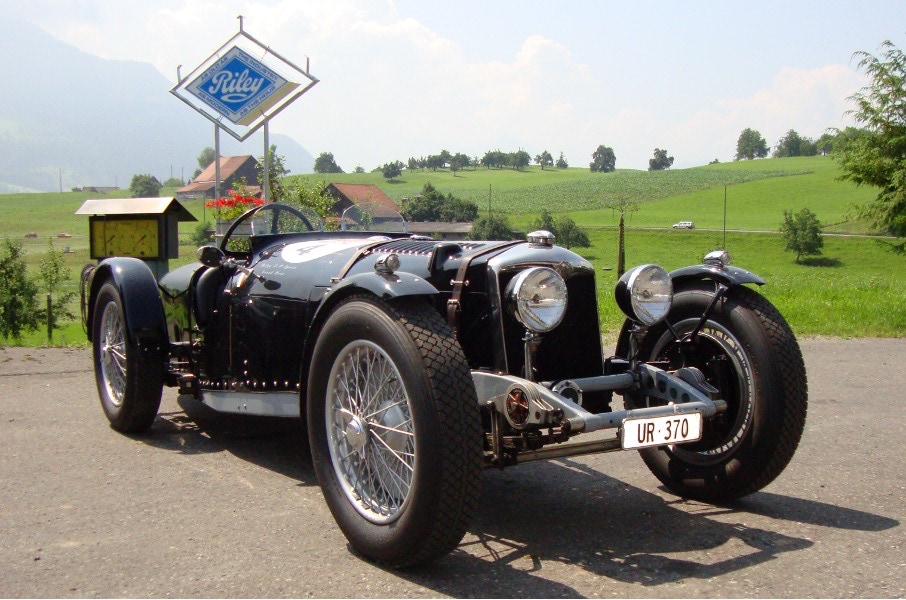
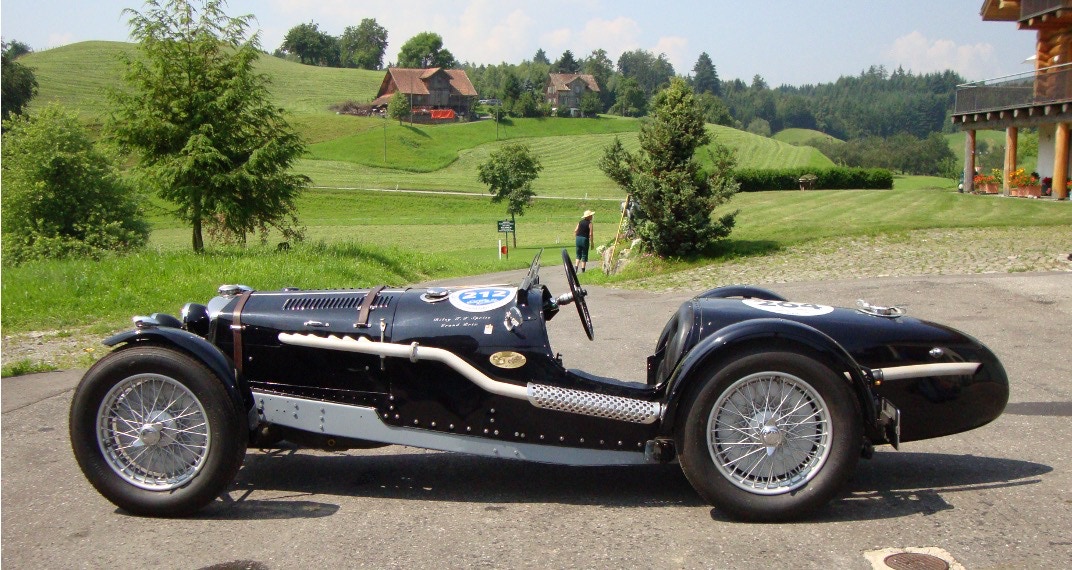
Production of six Works Racing Cars AVC 15 to 20 and registration on 31 May 1935 at Riley Coventry Ltd.
Important historical highlights of the AVC20
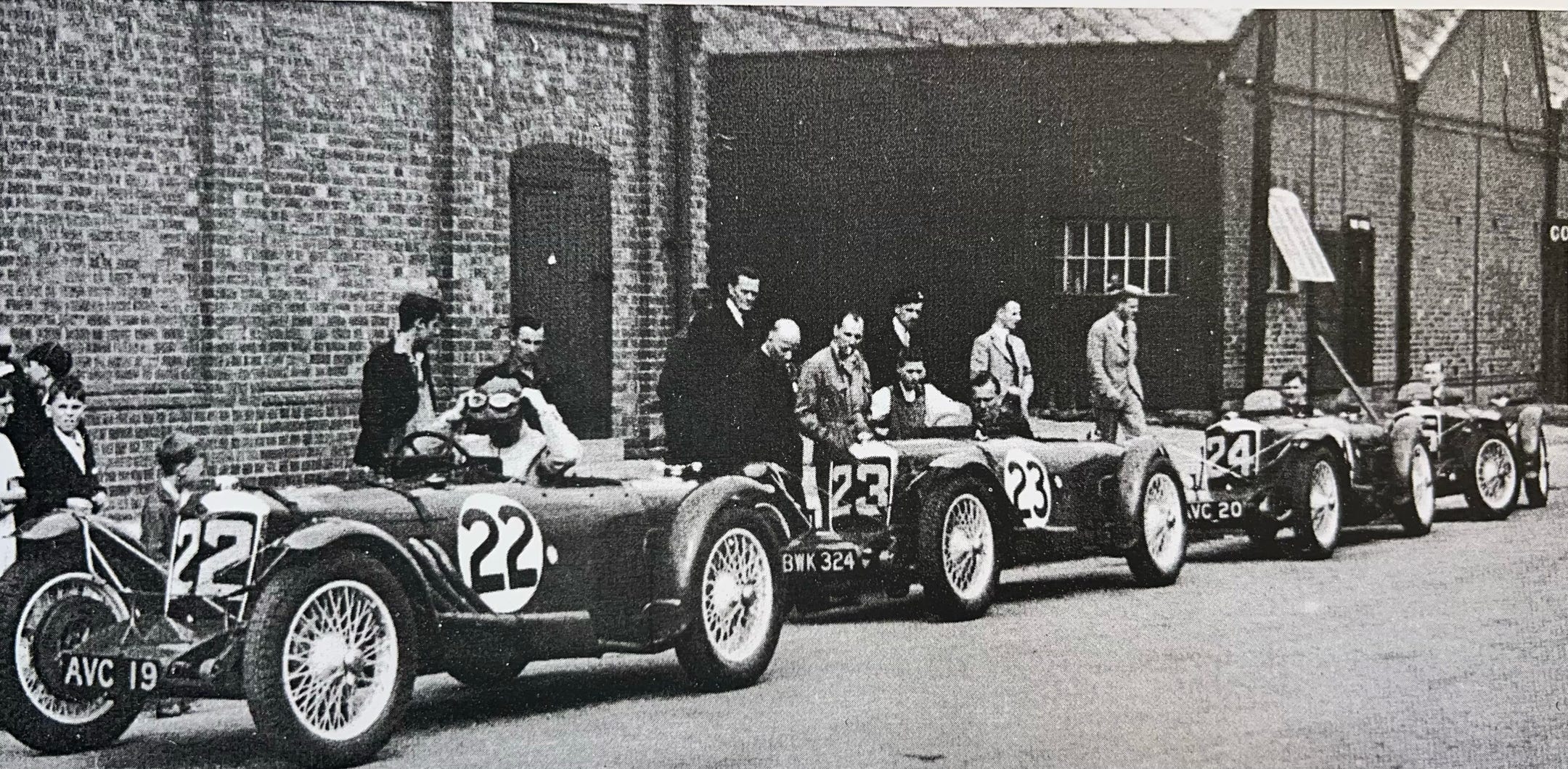
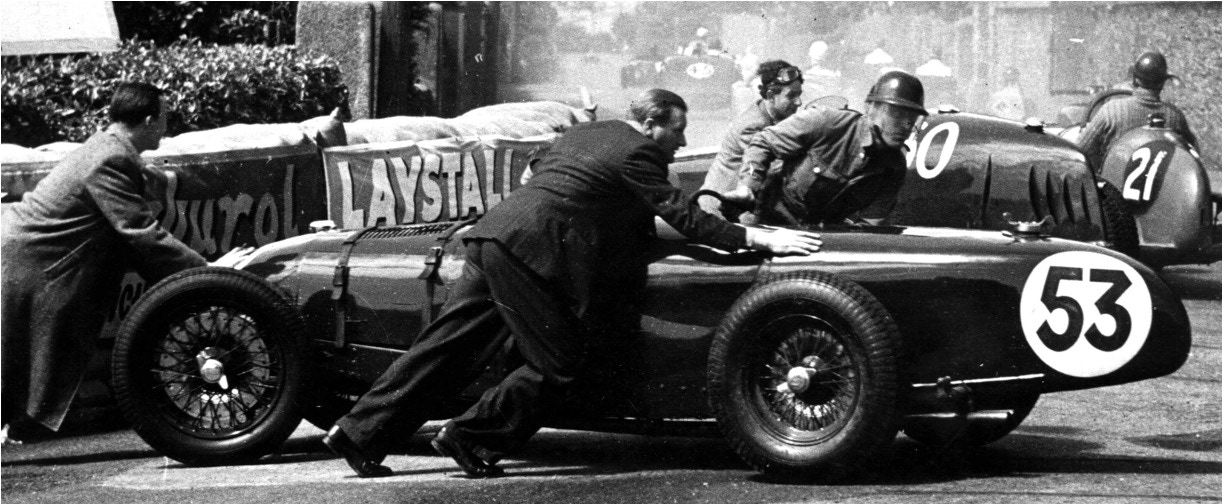
16 June 1935 Participation in the 24 Hours of Le Mans with Bill Von der Becke and Cliff Richardson.
4th place overall after 208 laps, average speed 117.16 kilometres per hour. 2nd place in class S1.
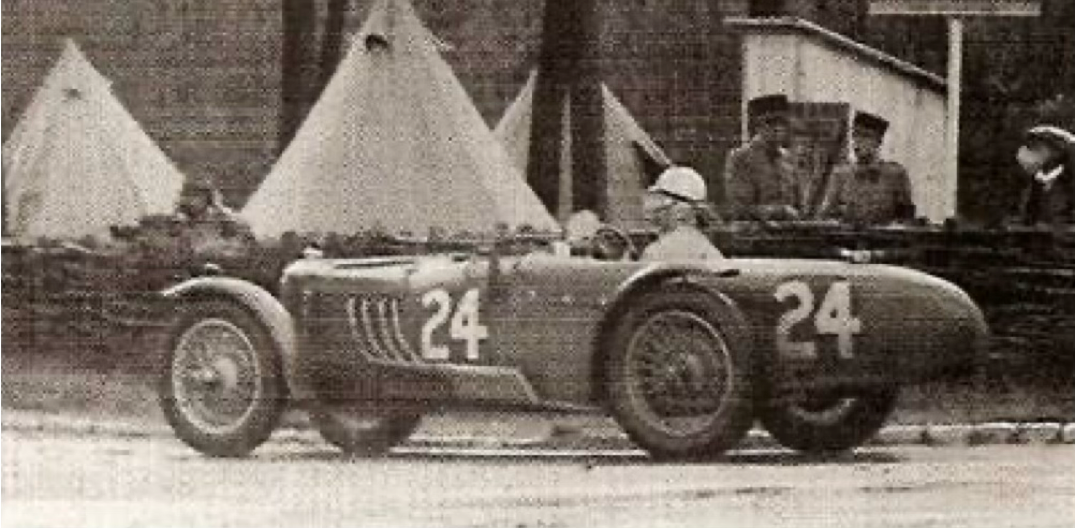
Participation in Shelsley Walsh Hillclimb, Worcestershire, 1935.
Driver: Bill Von der Becke
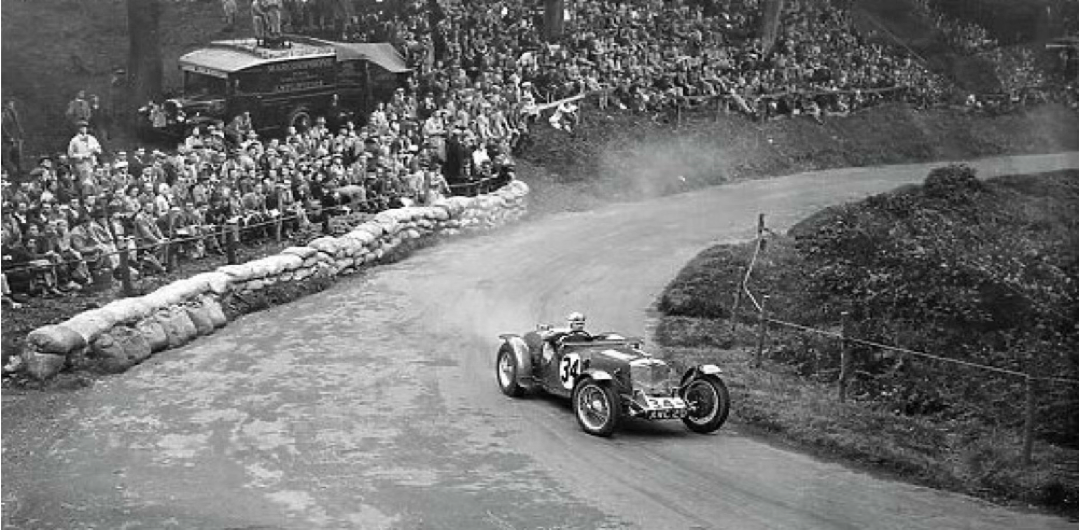
1935 RAC International Tourist Trophy, Ards-Belfast Percy Maclure 6th place.
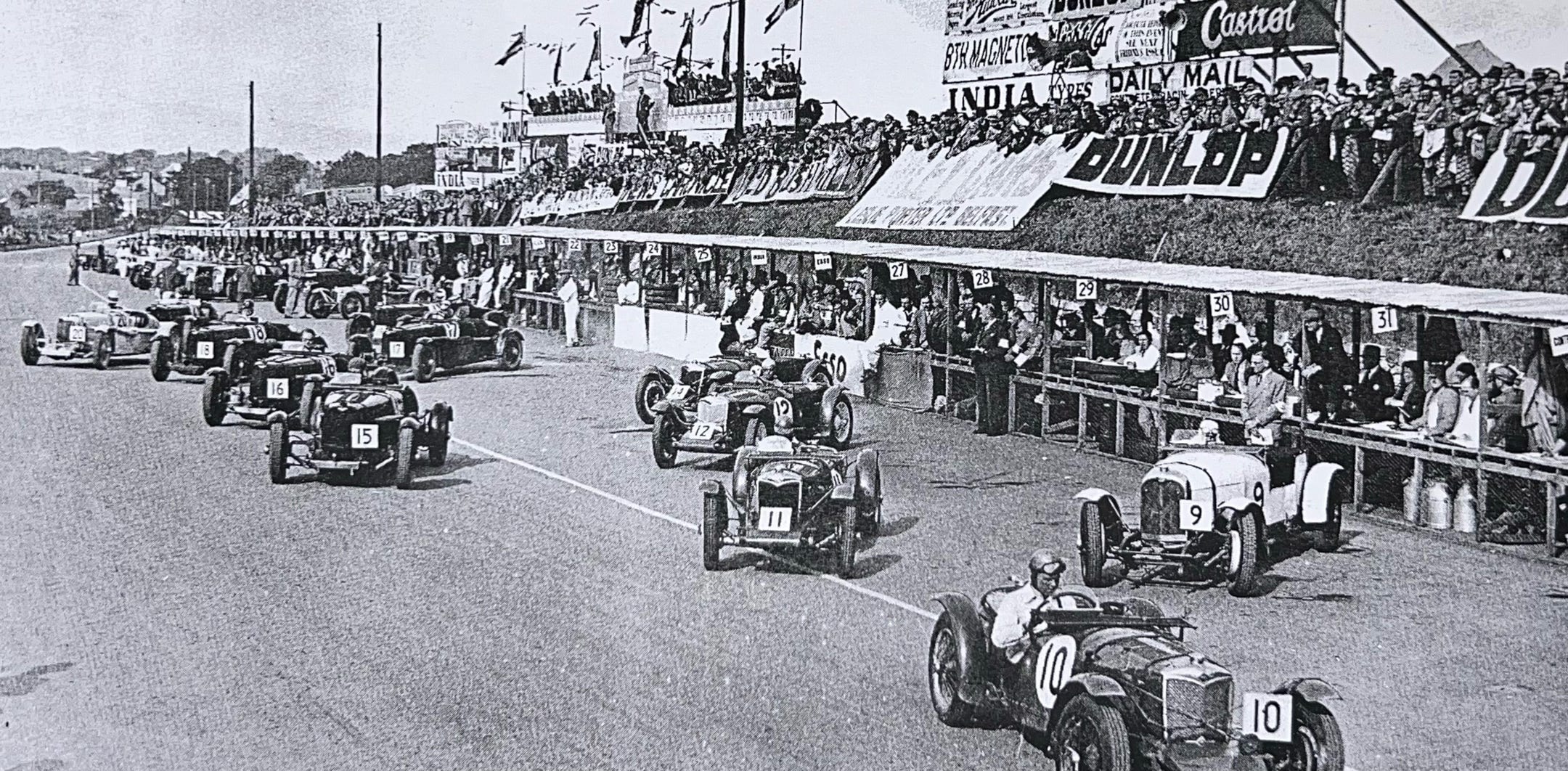
1937 sold to F.R. Bob Gerard.
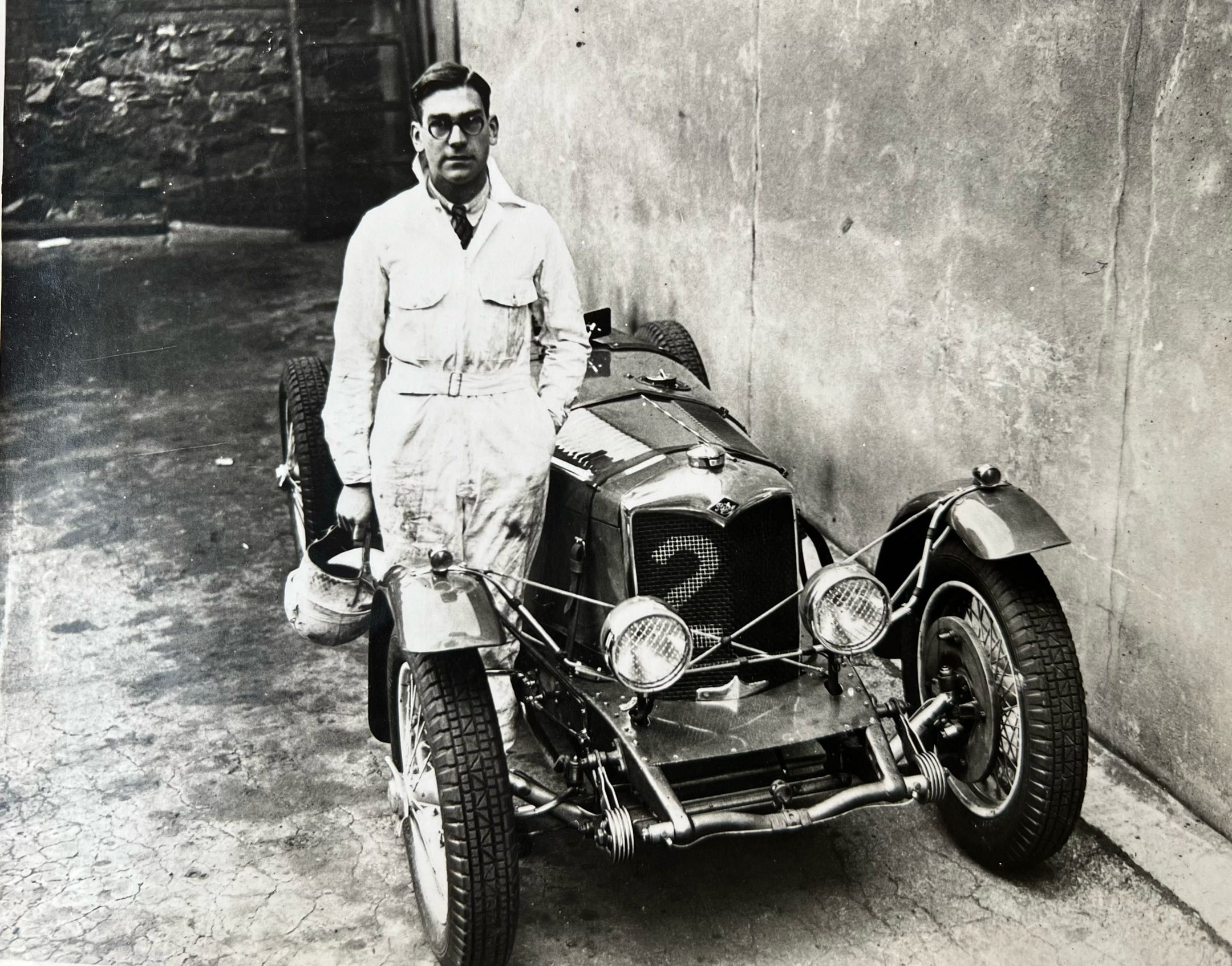
1936 to 1939 several participations at Brooklands with a victory on 7 August 1939.
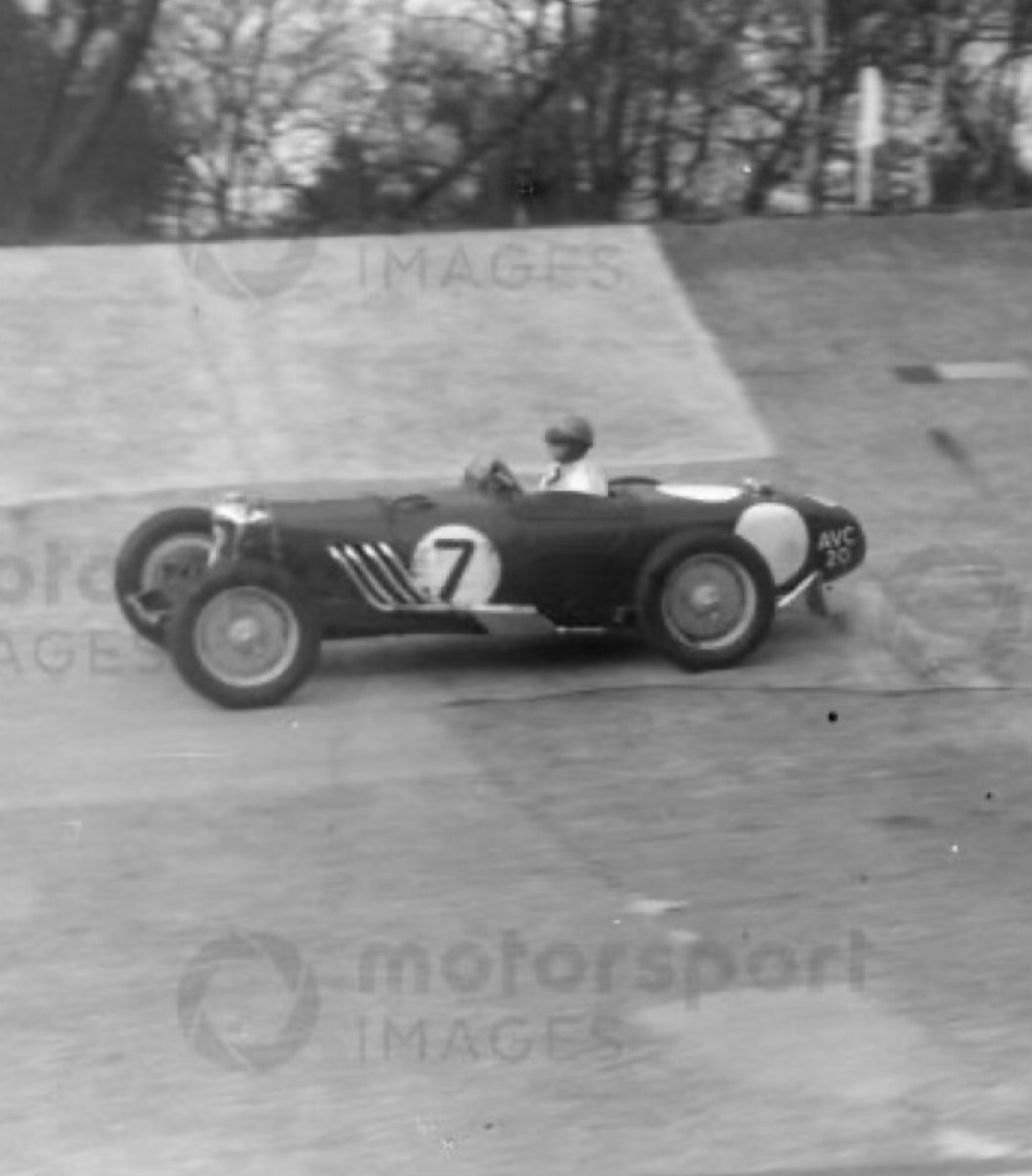
12-hour race in Donington with 3rd place. Tourist Trophy Donington 1937 and 1938 with Gerard and Bateman.
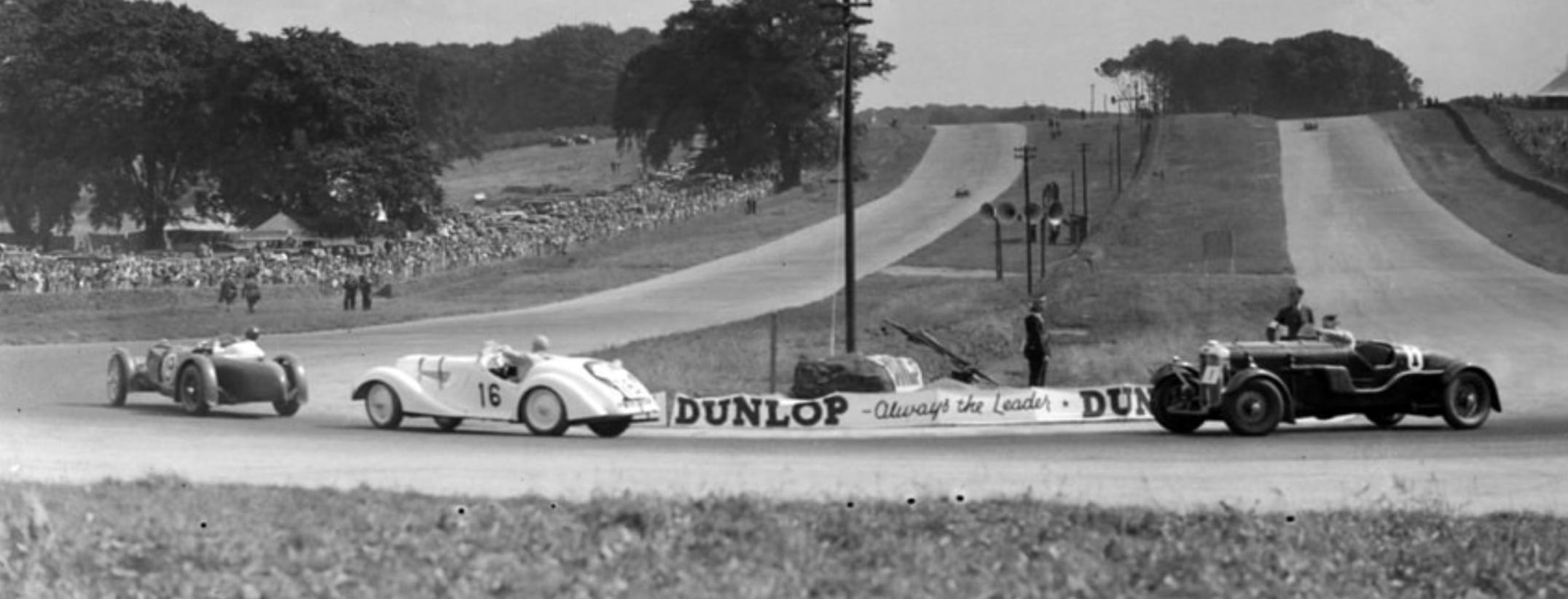
1944 sold to T.C: Harrison, pictured at Prescott Hillclimb
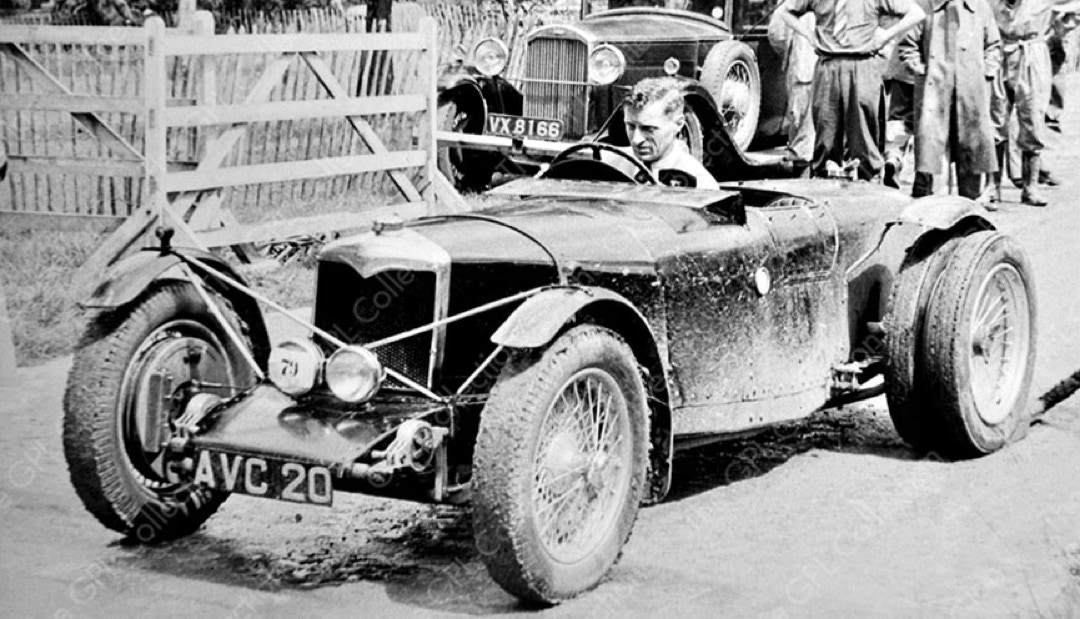
1944 T.C. Harrison installs a 6-cylinder engine.
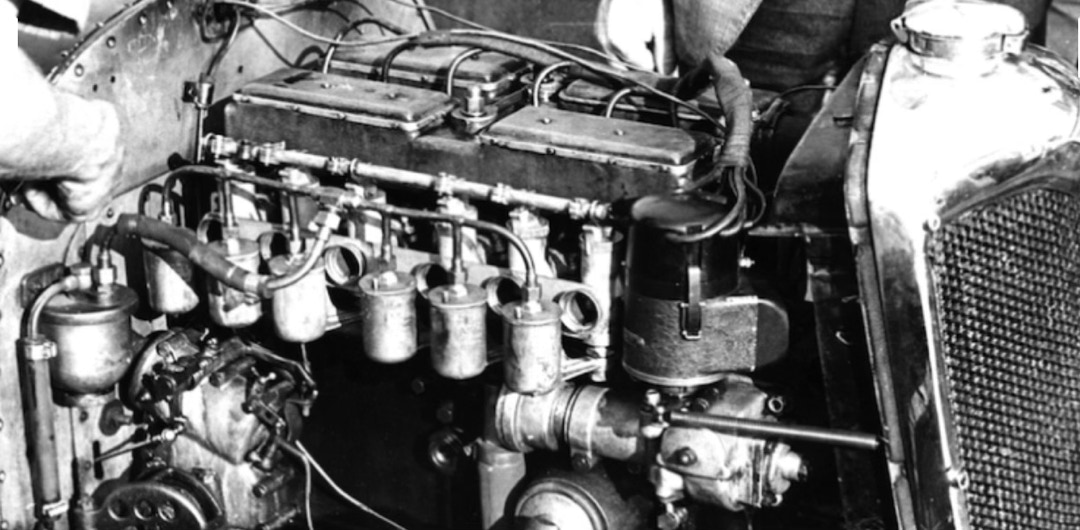
1947 Manx Cup, Isle of Man, Snaefell Mountain Course, 2nd place.
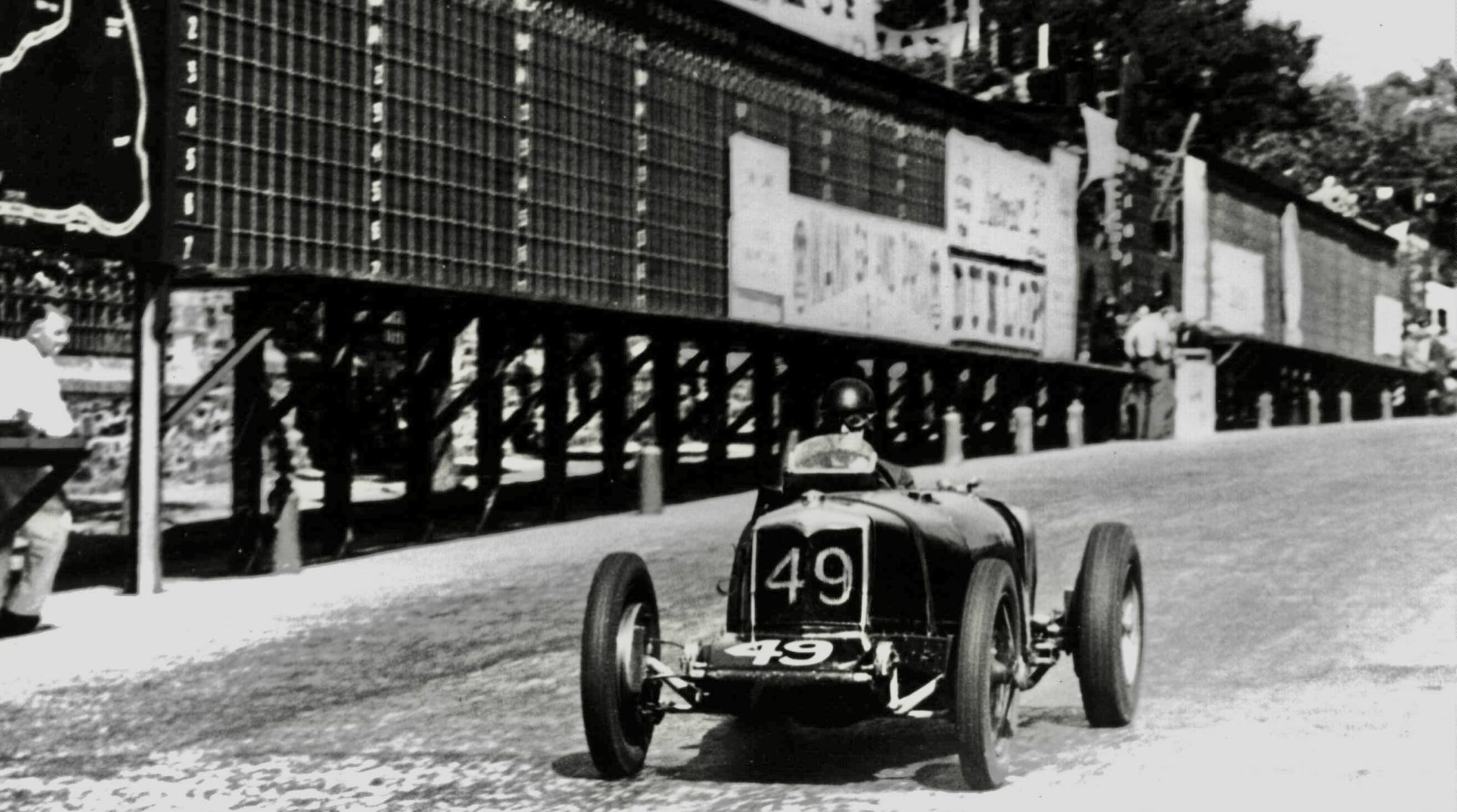
Harrison rebuilds the car in 1948 for the Manx Grand Prix. He lowers the radiator and bonnet by 3 inches and installs an aerodynamic front fairing. While leading the race, he crashes. The car is so badly damaged that he has to replace the chassis.
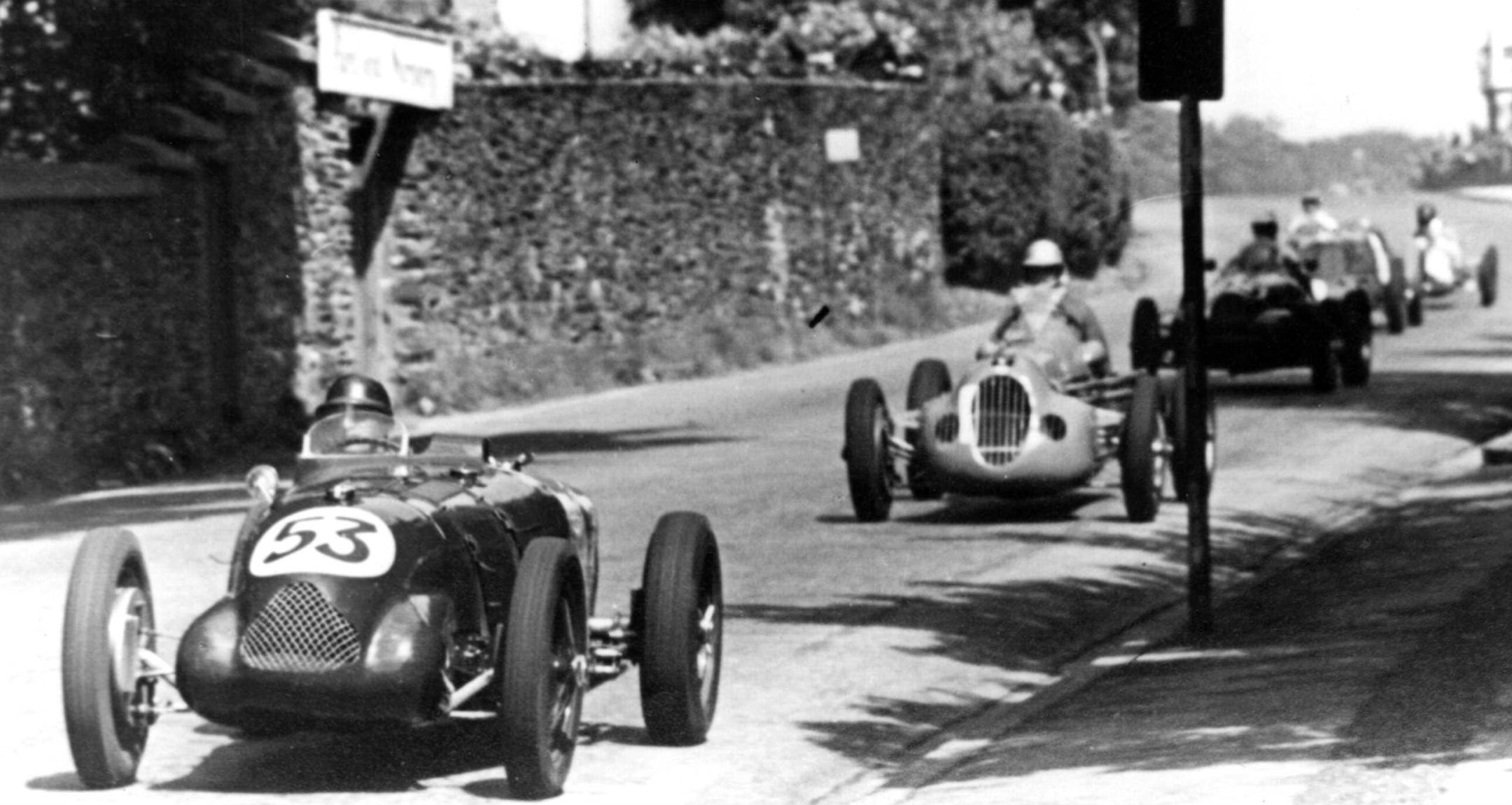
1949 Sold to Gordon Shillito.
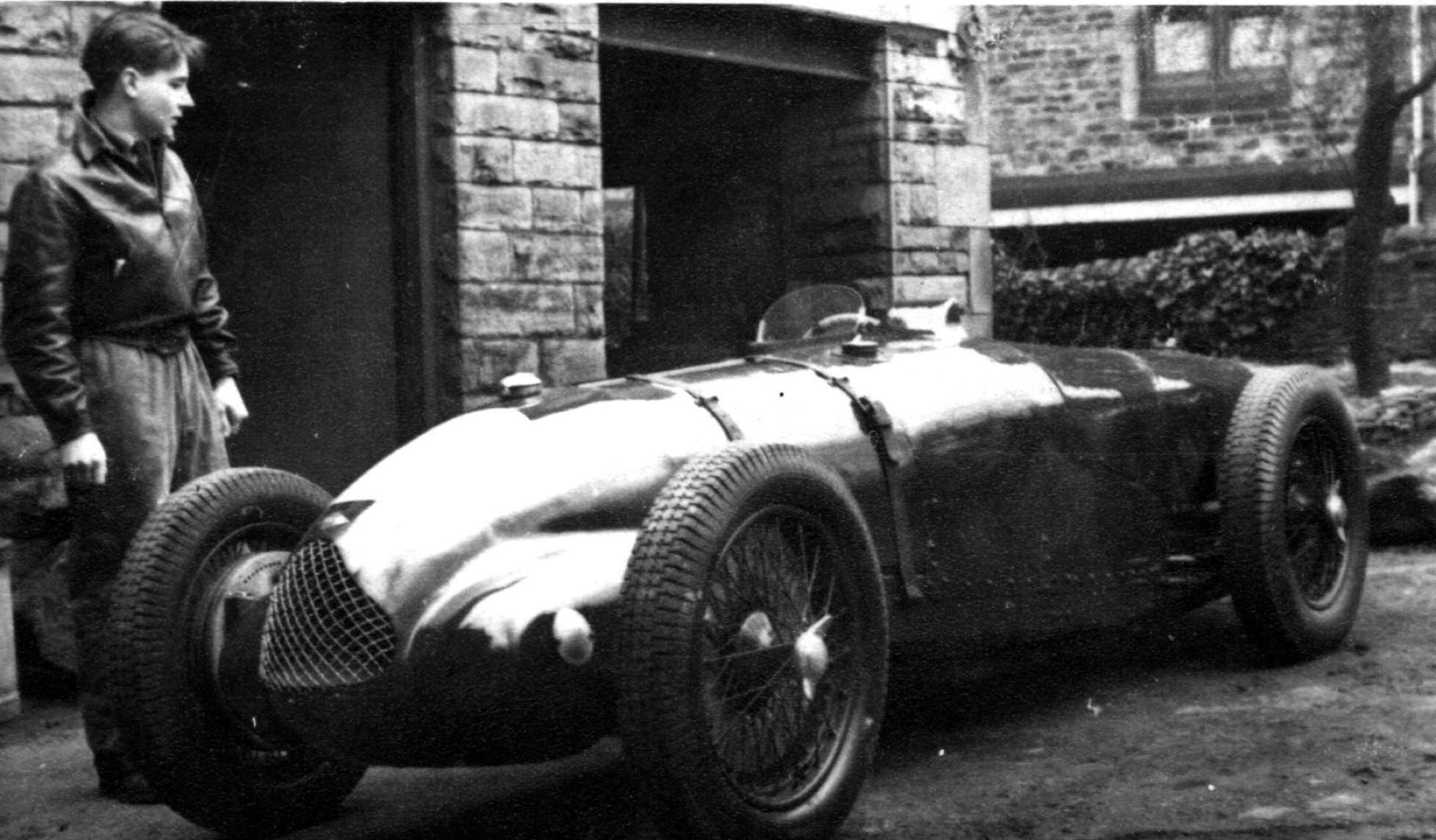
1949 to 1951 Participated in the Goodwood International. (He wins!) Blandford Trophy (He wins!) Nottingham Trophy.
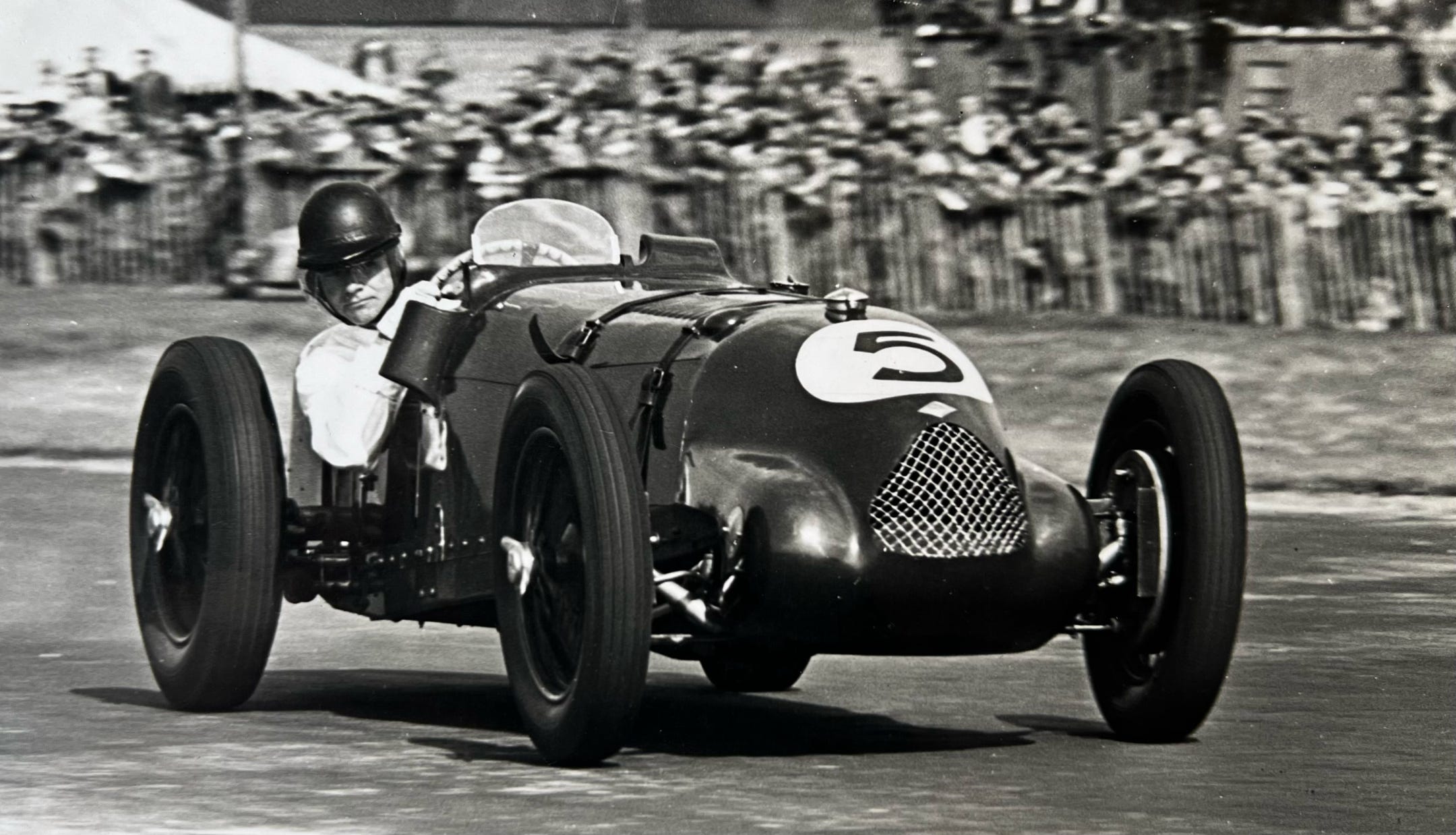
Manx Cup, Isle of Man
- 1949 2nd place
- 1950 2nd place
- 1951 4th place
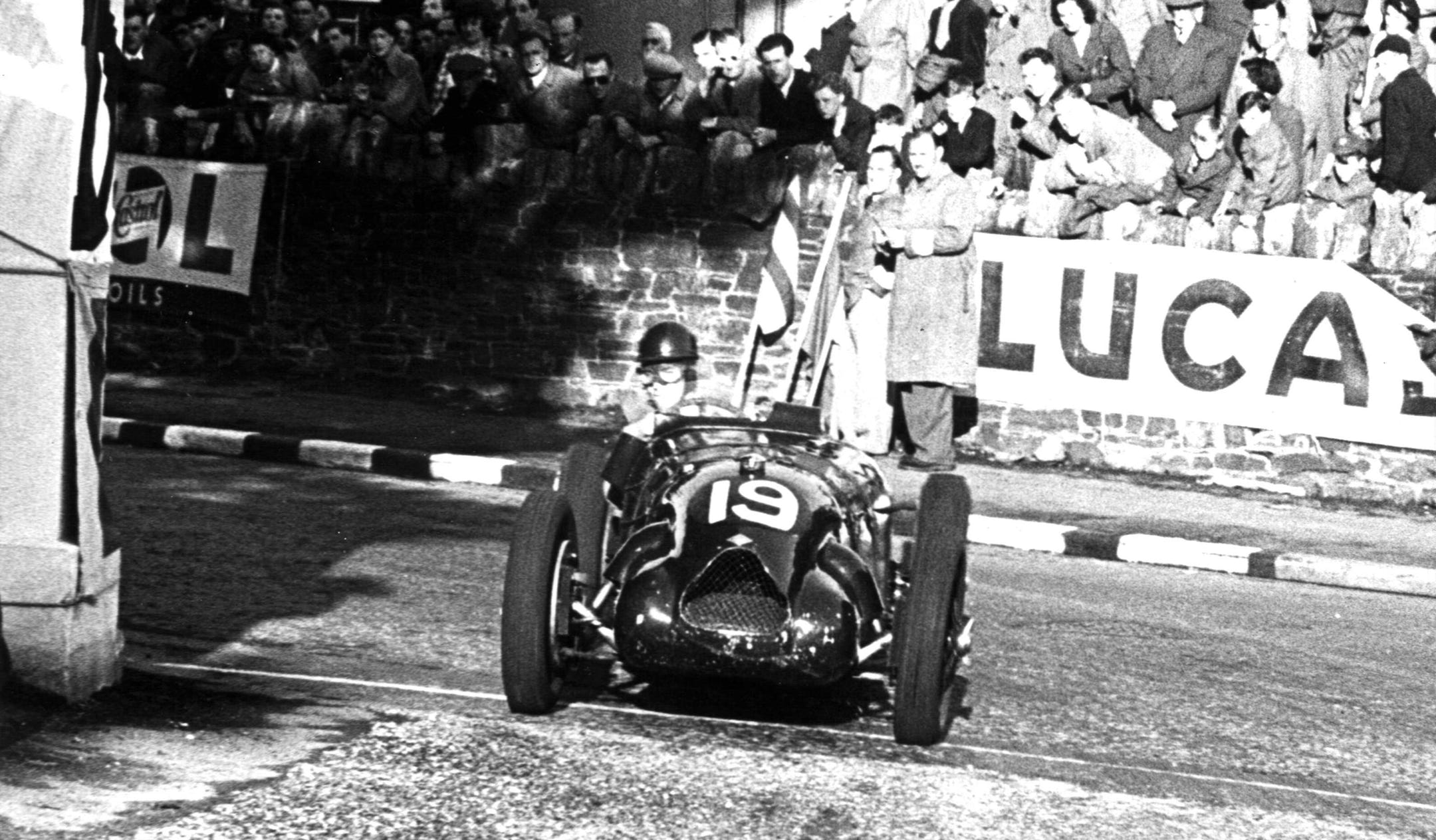
After an engine failure in the Sheffield Telegraph Trophy, the car was stored in a dismantled state and sold to Colin Ready in 1962.
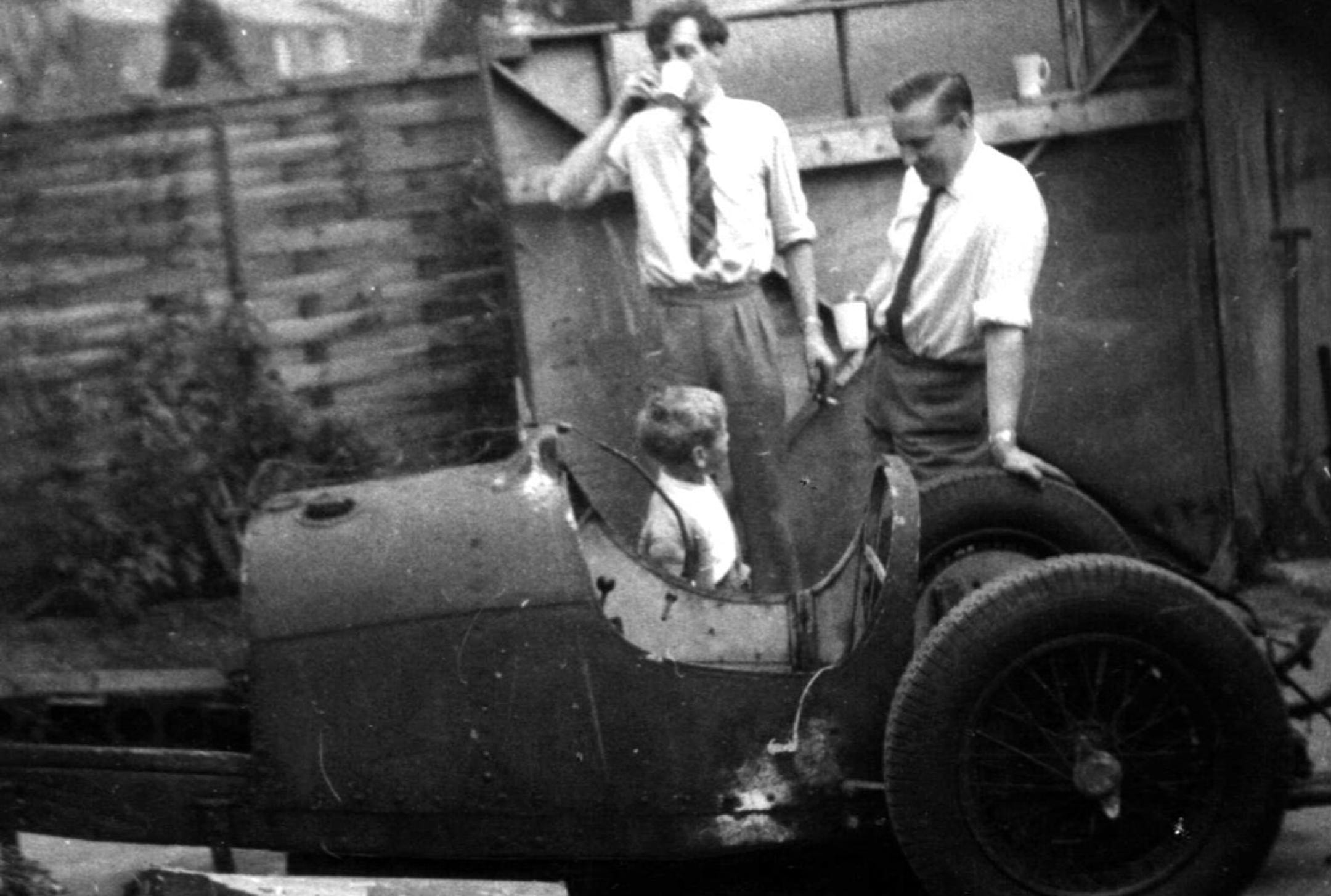
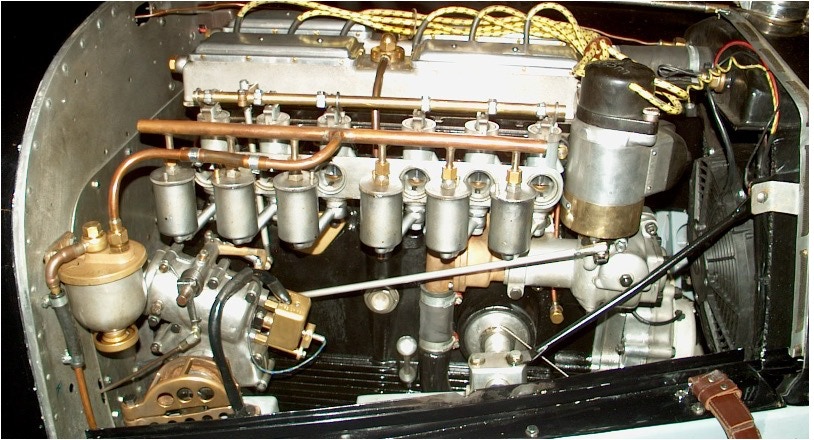
Colin Ready is completely rebuilding the car. He removes the aero front and installs a 4-cylinder engine with SU carburettor.
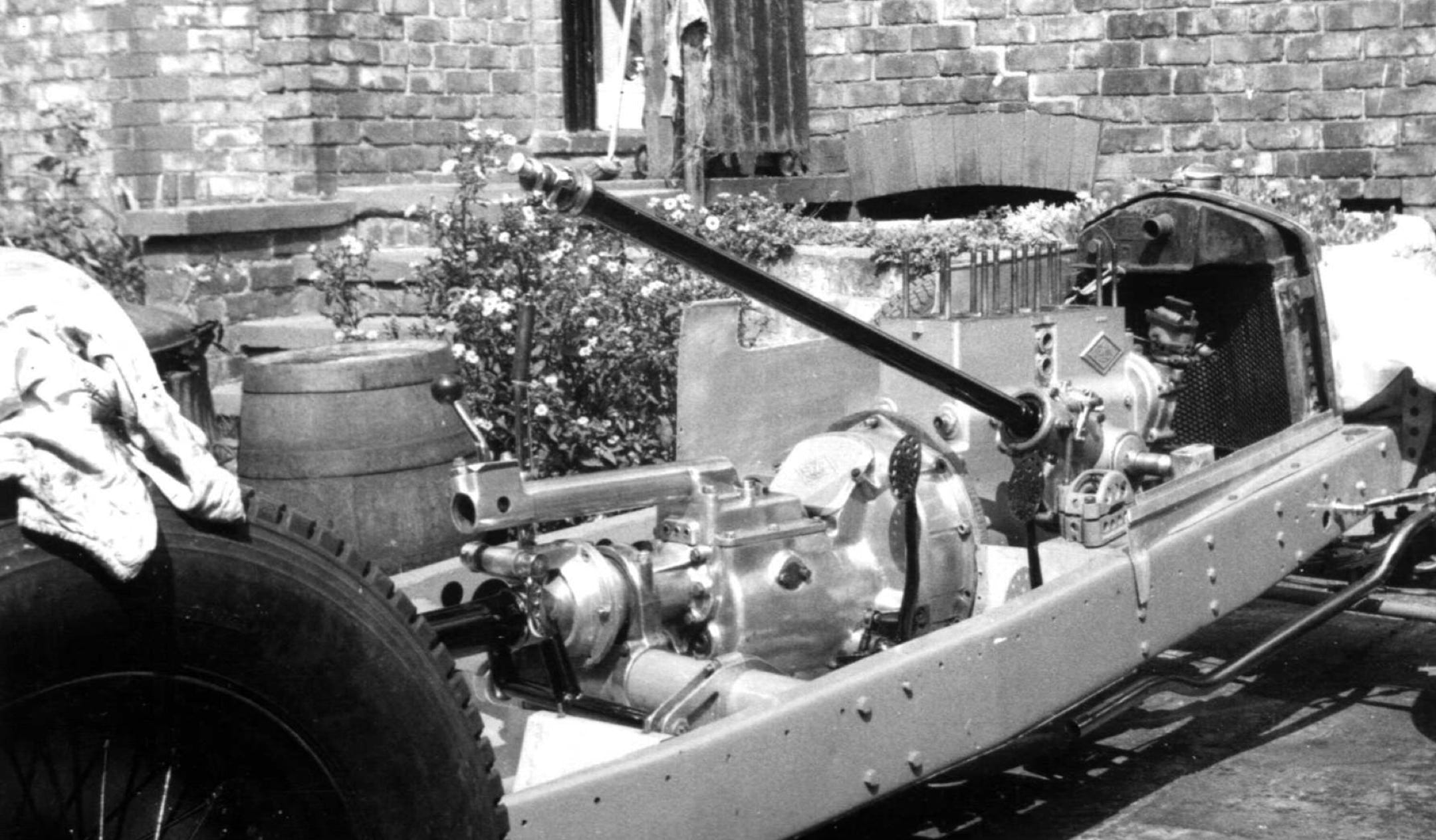
In 1964, Colin Readey was able to present his restored car for the first time.
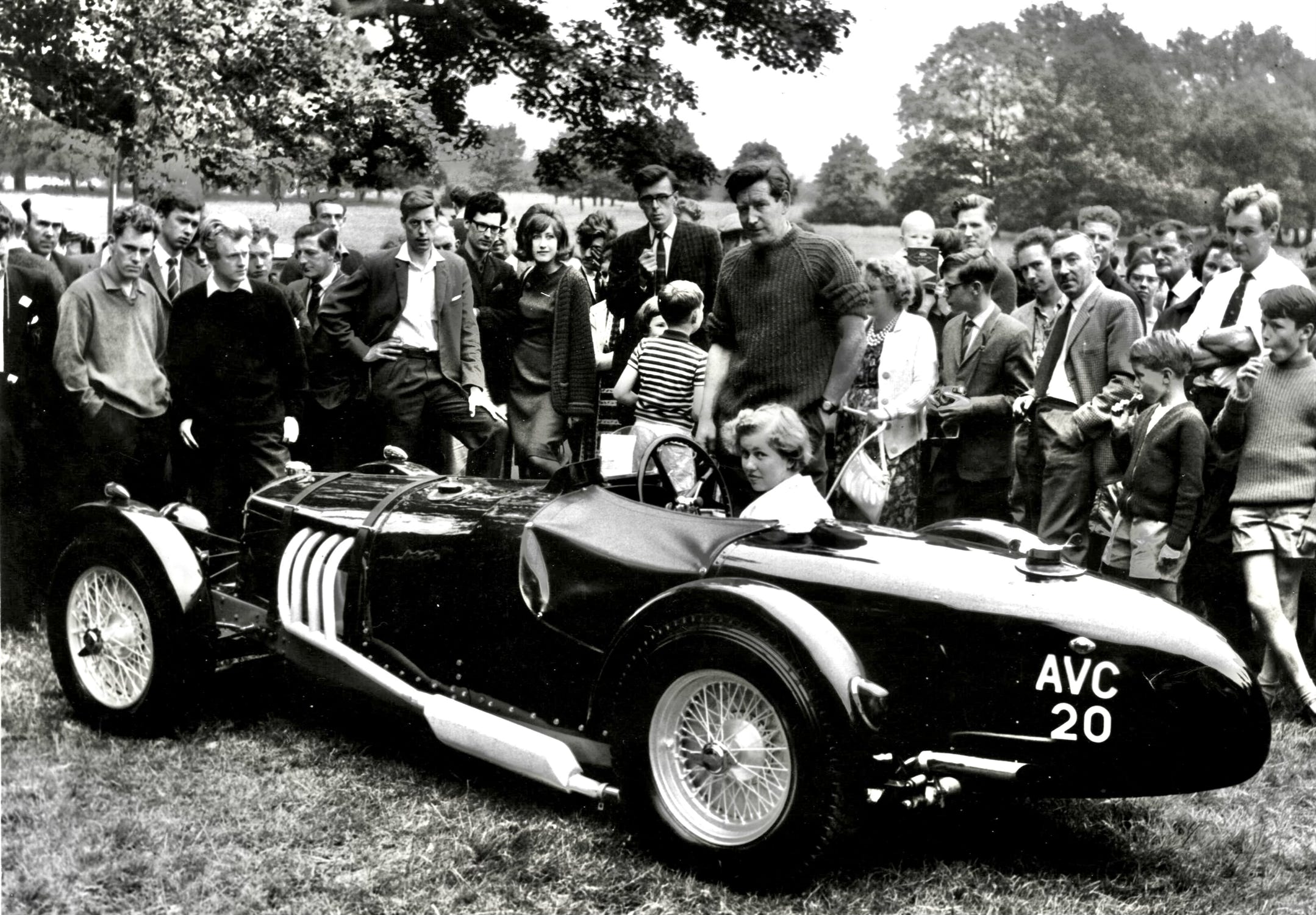
In June 1966, Readey again installed a 6-cylinder engine, but still with two SU carburetors.
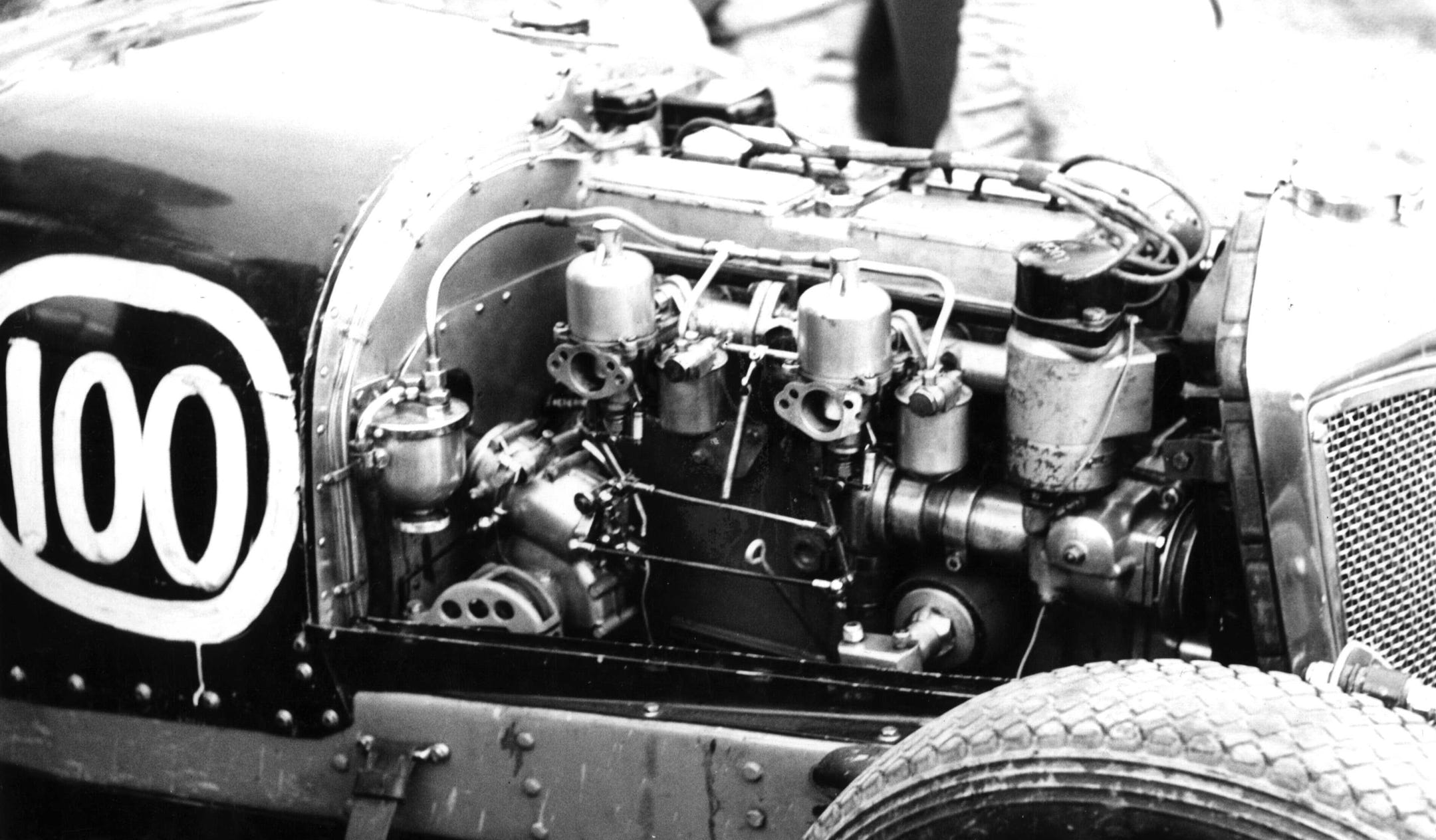
However, as early as July 1966, he again installed the 6 Amal carburettors that had been used from 1946 to 1951.
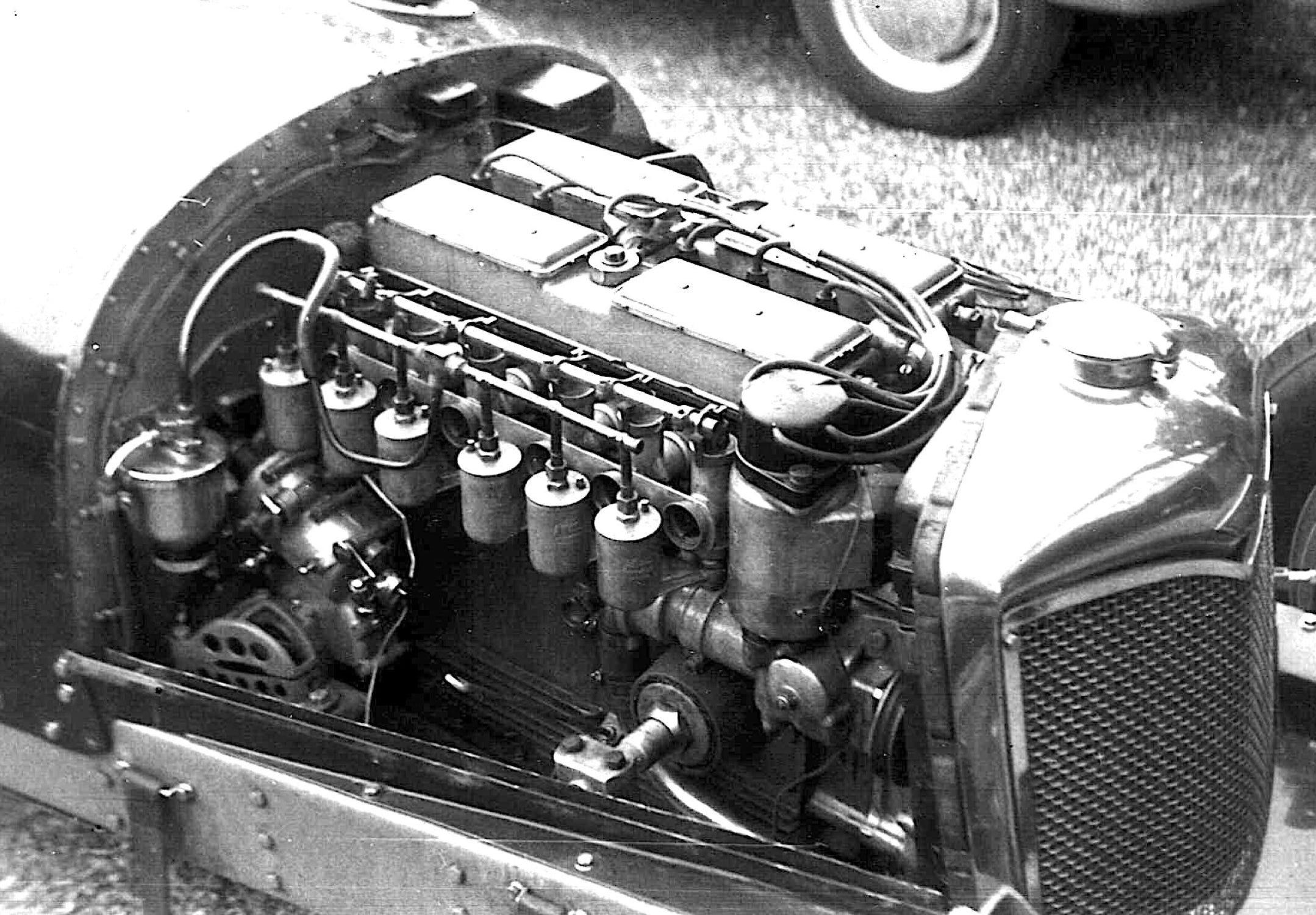
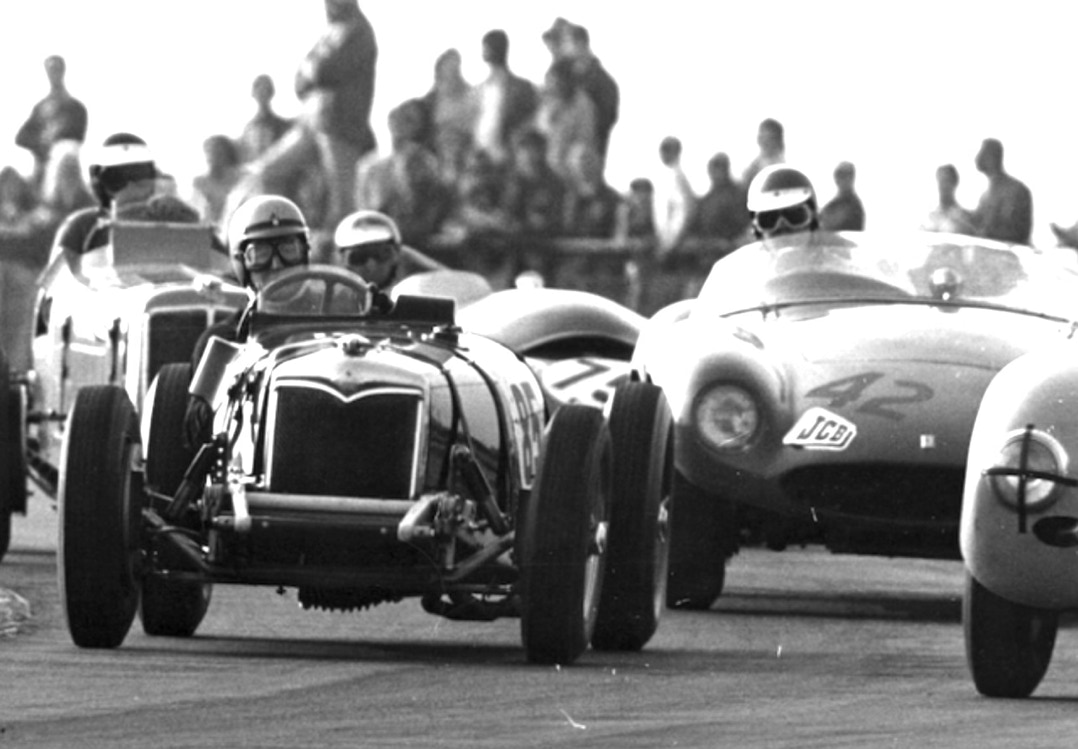
Readeay took part in countless races. In total, the car is said to have competed in 125 races between 1935 and 1995.
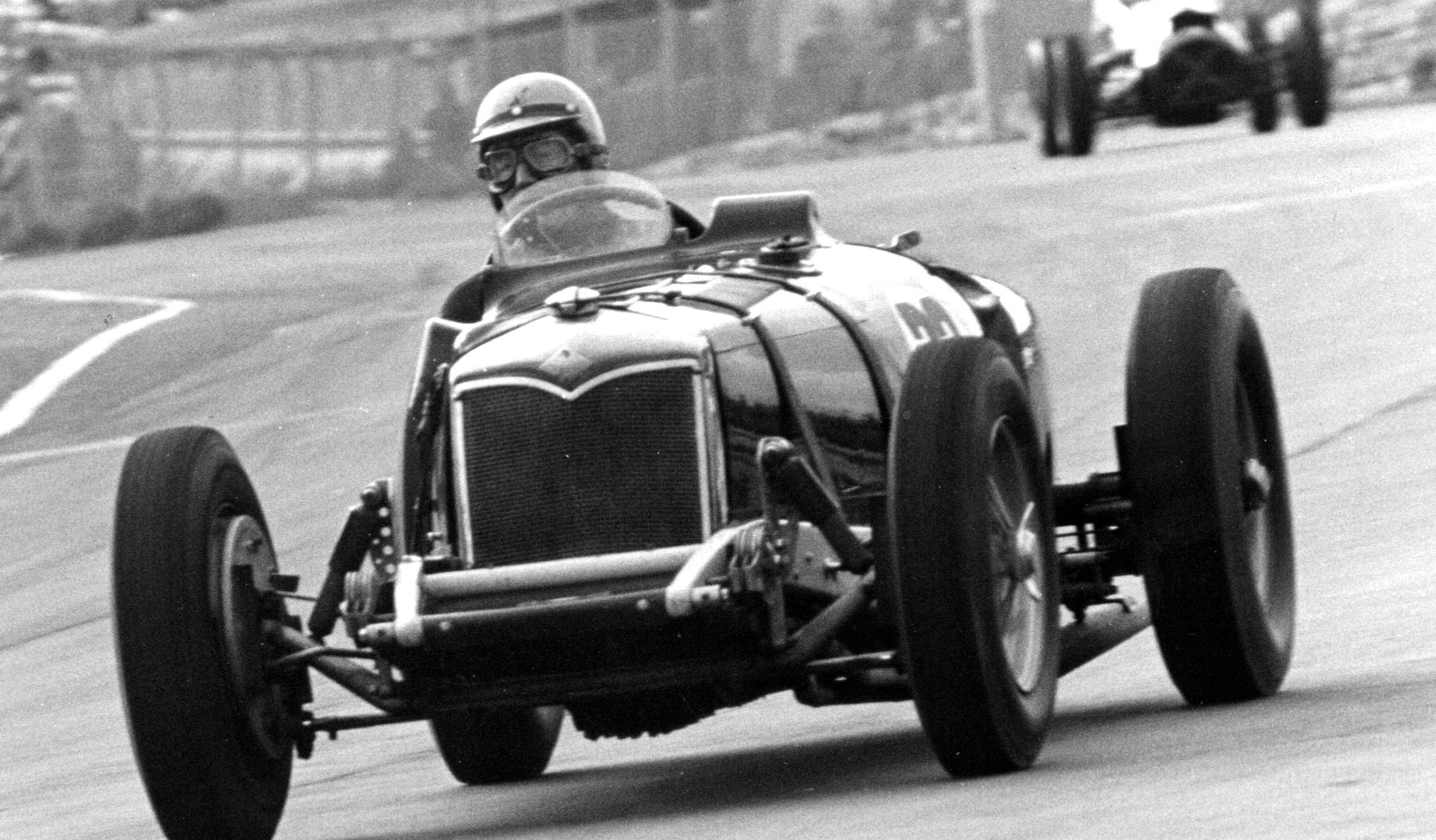
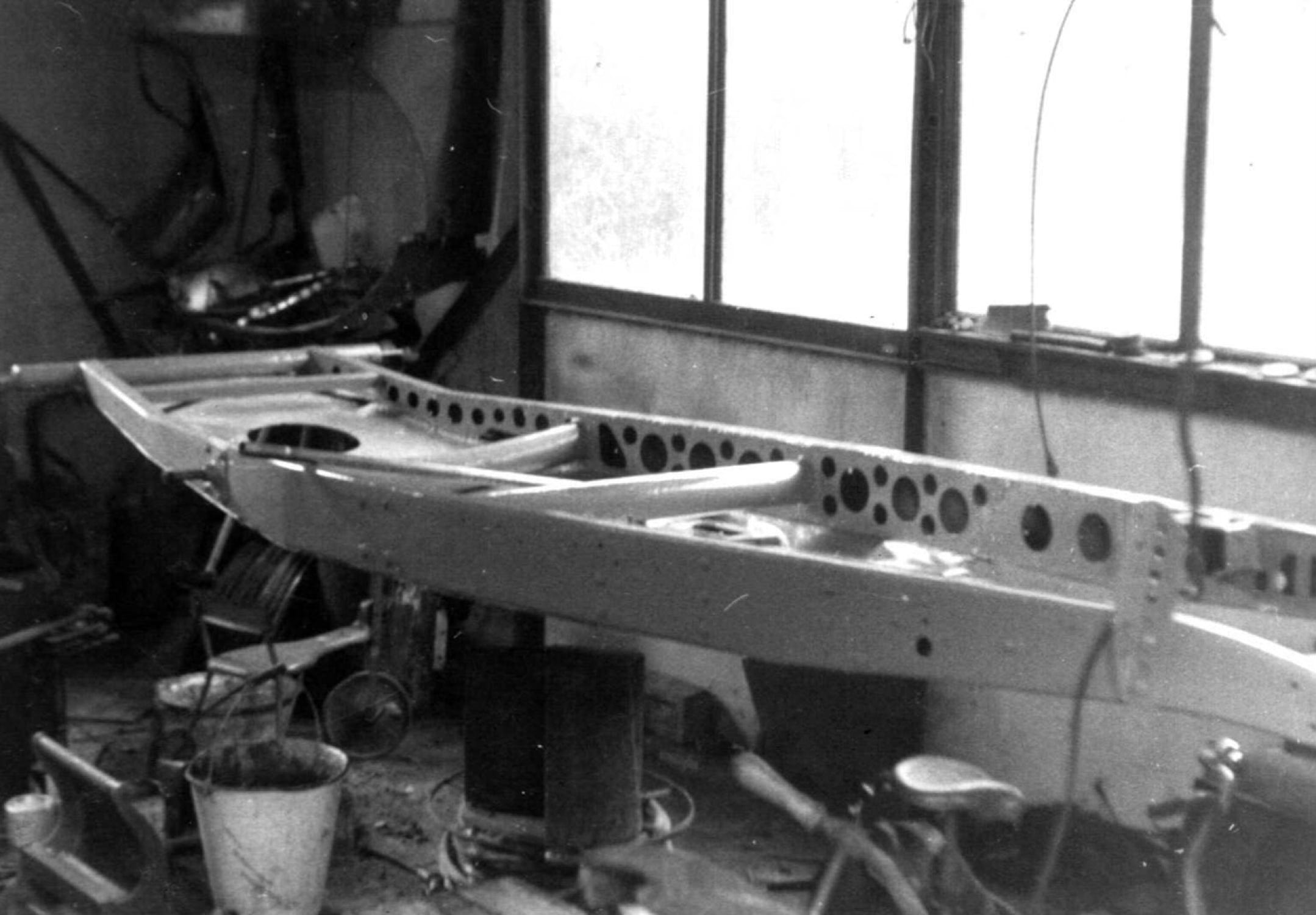
On 21 September 1969, Readey crashed his car during the race at Snetterton. The car suffered severe front damage, meaning that the chassis had to be replaced for the second time since 1948. Colin put the defective (Harisson) chassis aside and had a new one made. Certain sources mention that he had several chassis built at once, which causes a lot of confusion around the AVC20. From now on, our car has an R at the end of the frame number, so 22T1916R.
In 1984, Readey sold the crashed chassis with the registration number OSV177 to a Mr M. Gluckmann. Mr Gluckmann built a new body on it and sold it as AVC20 to Australia, even though he was never in possession of the original papers. This later led to a dispute between Colin Readey and Mr Gluckman.
Colin Readey had last registered the AVC20 on 5 February 1991.
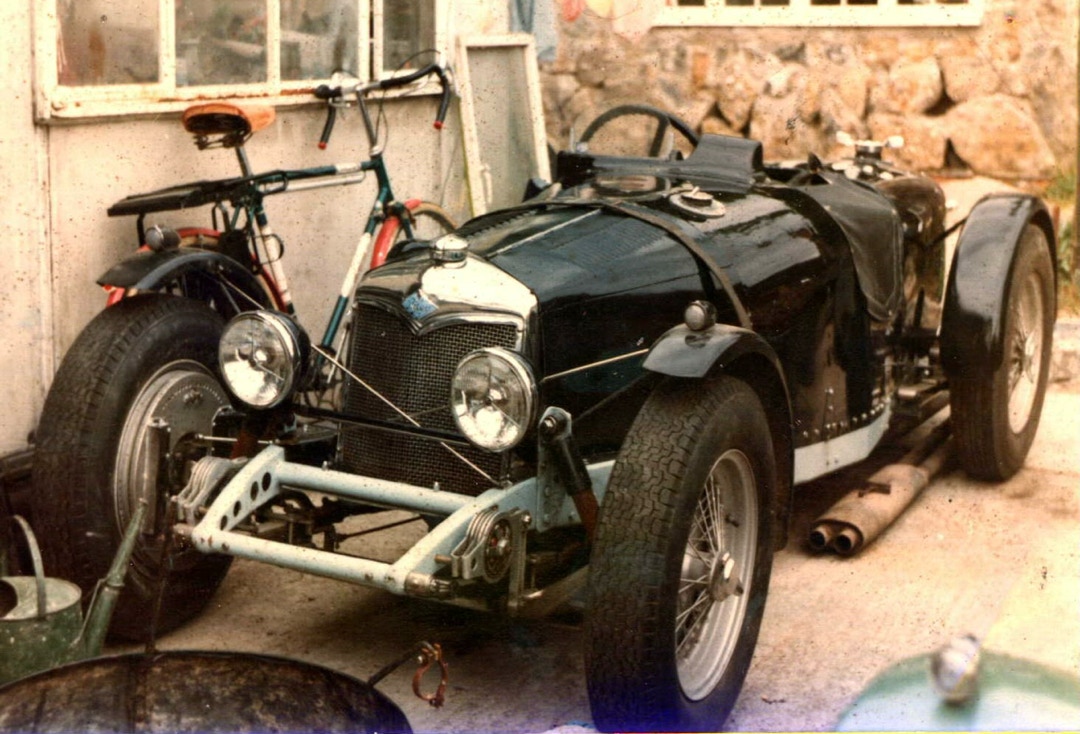
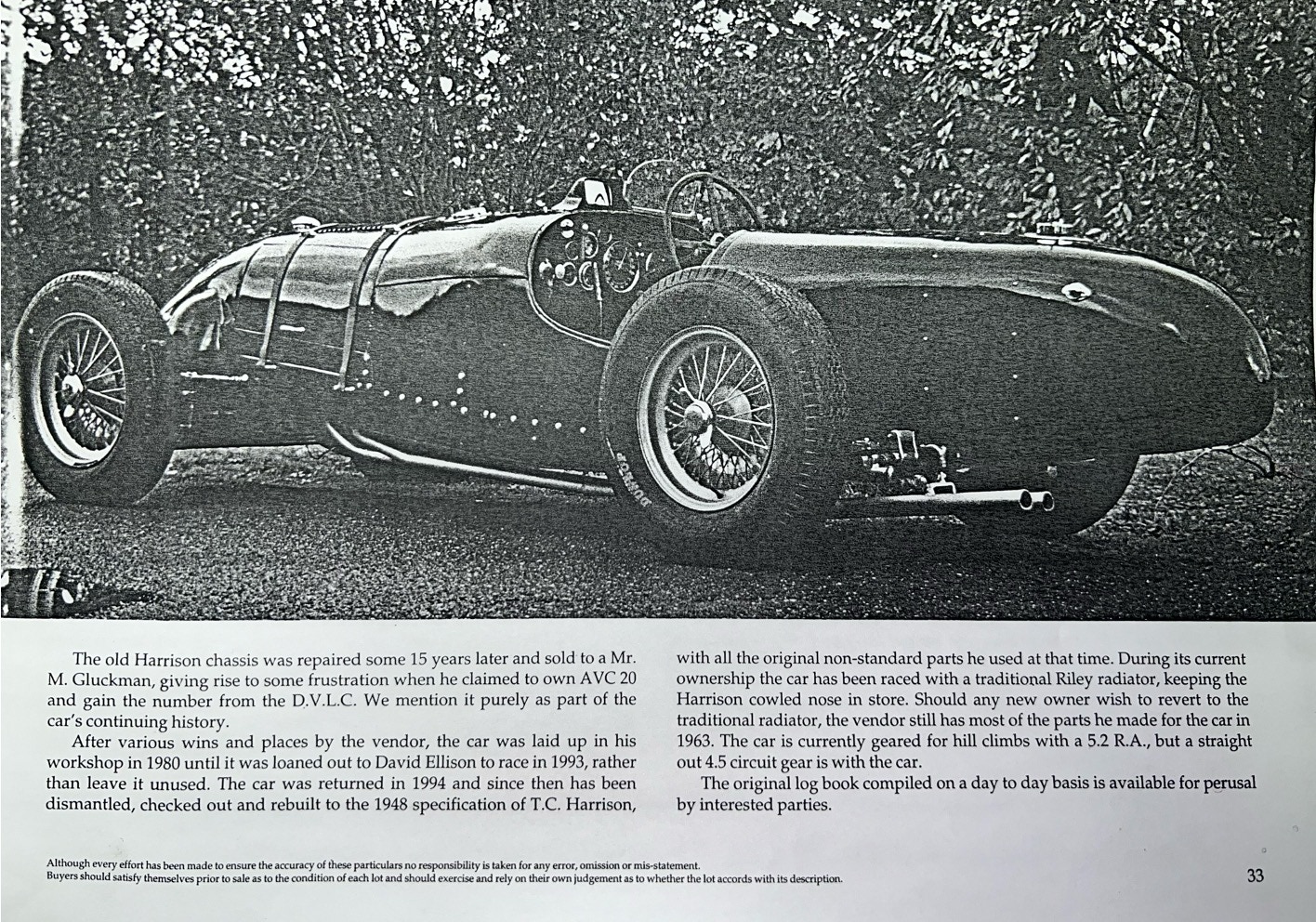
In 1995, Readey restored the car to its 1948 condition with the original aero fairing and had it auctioned off at Coys of Kensington. The selling price was a disappointment to him. The confusion surrounding the ‘real’ AVC20 was too great, causing bidders to be very hesitant.
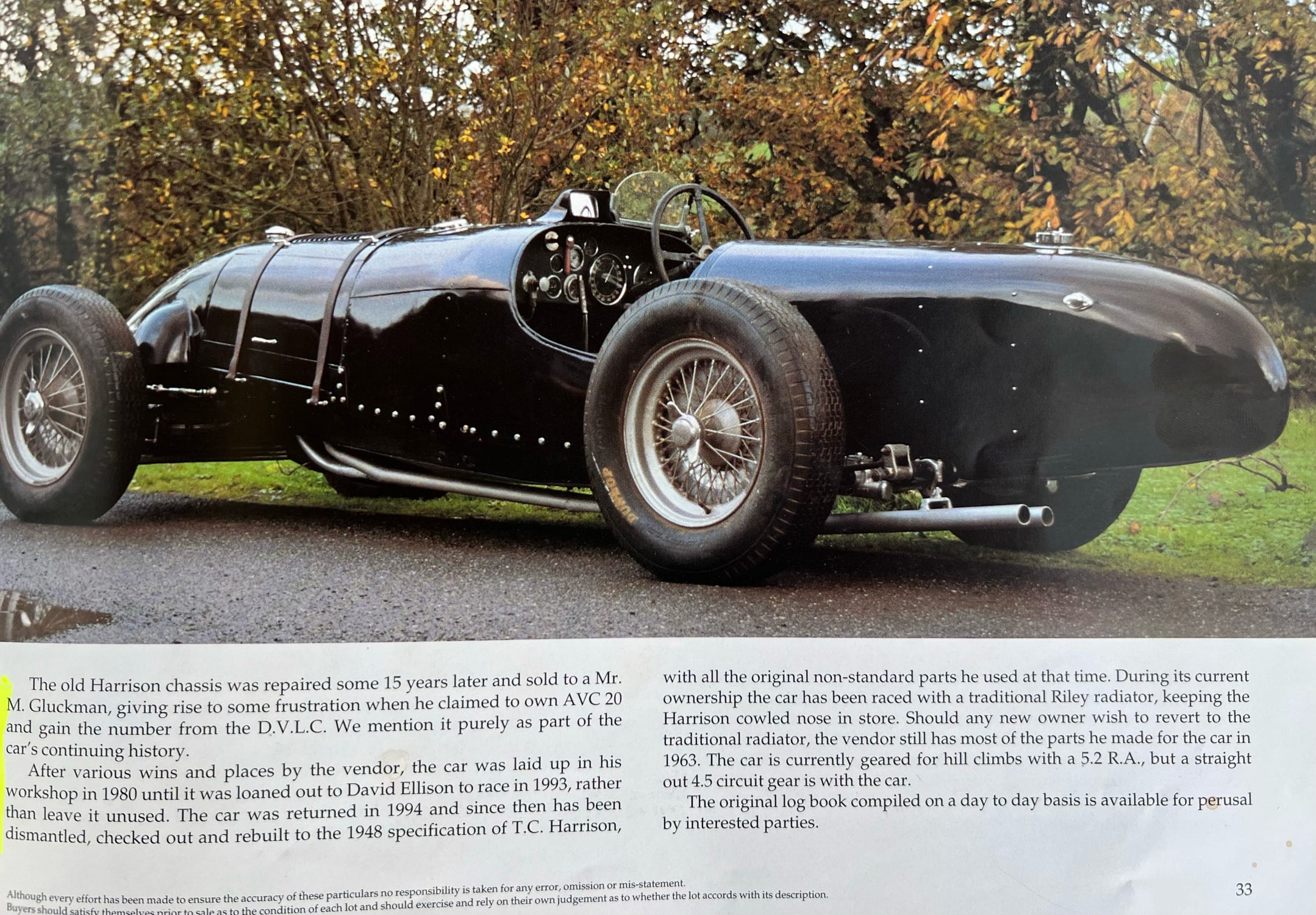
Stefan Schollwoeck from Germany bought the vehicle and had Colin Readey convert it back to the traditional radiator before delivery. The engine was now running on methanol. We don't know exactly when this conversion took place.
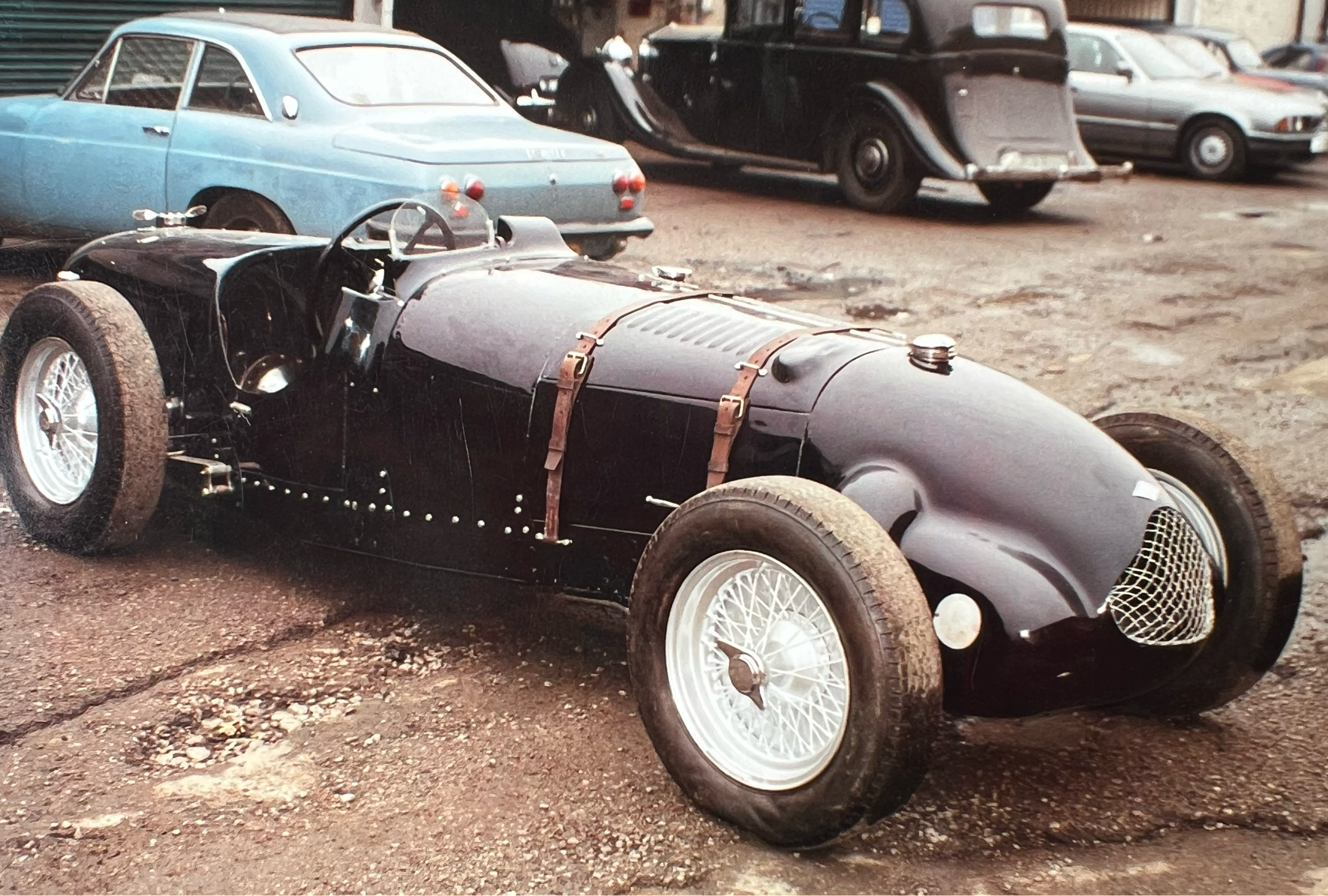
In 1999, Georges Blättler bought the car from Mr Schollwoeck and imported it into Switzerland. Soon after, an engine failure put the vehicle out of operation for the time being. A restoration began. However, the project was too complex, so a new buyer was sought for the dismantled vehicle.
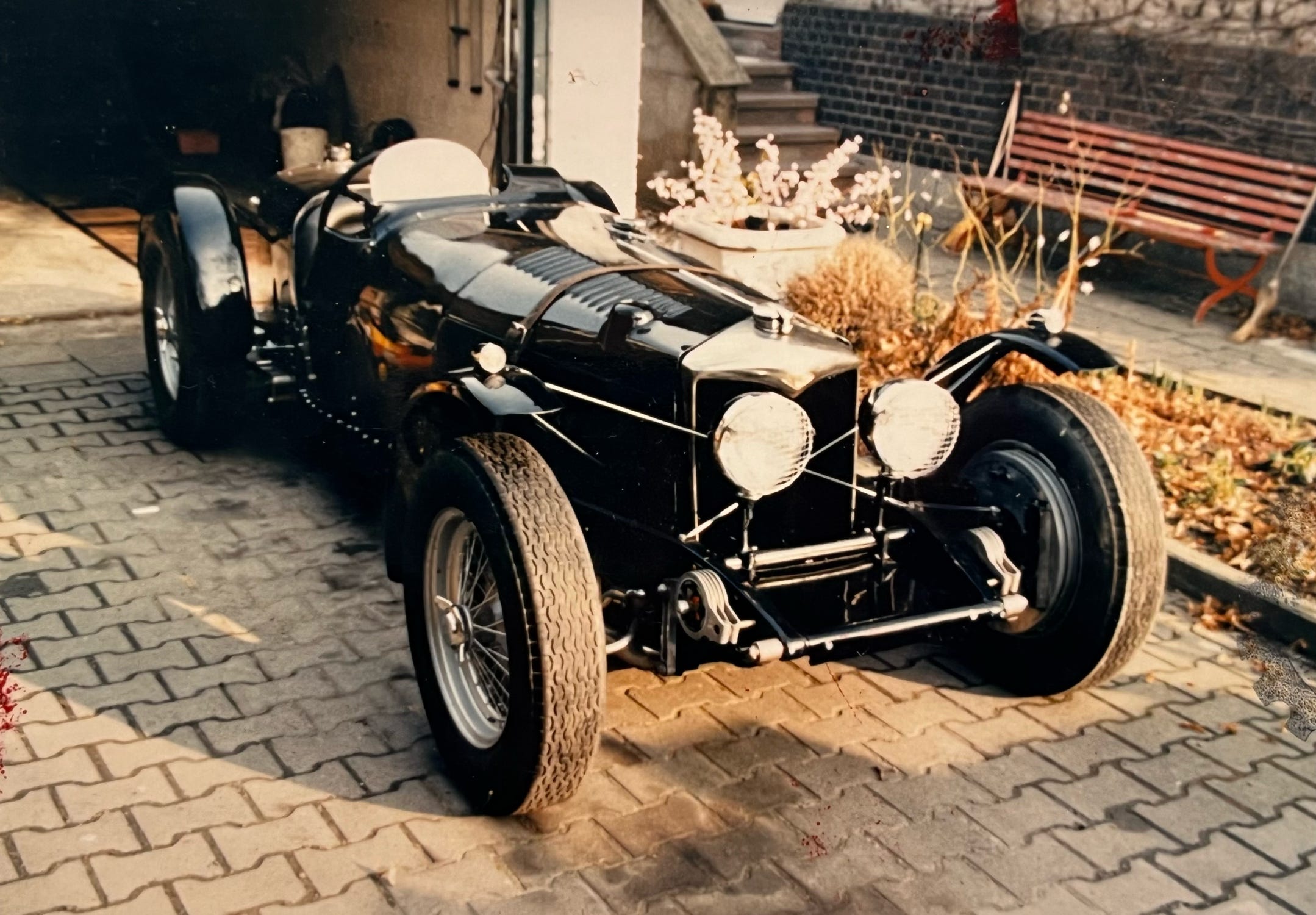
The race car, which by now had a very eventful history, was purchased by Dr Ernst Marty in 2000. He commissioned Edy Schorno, a renowned classic car restorer, to completely restore the vehicle. The engine was tamed and converted back to petrol. During the restoration, some marked parts of the AVC20 came to light.
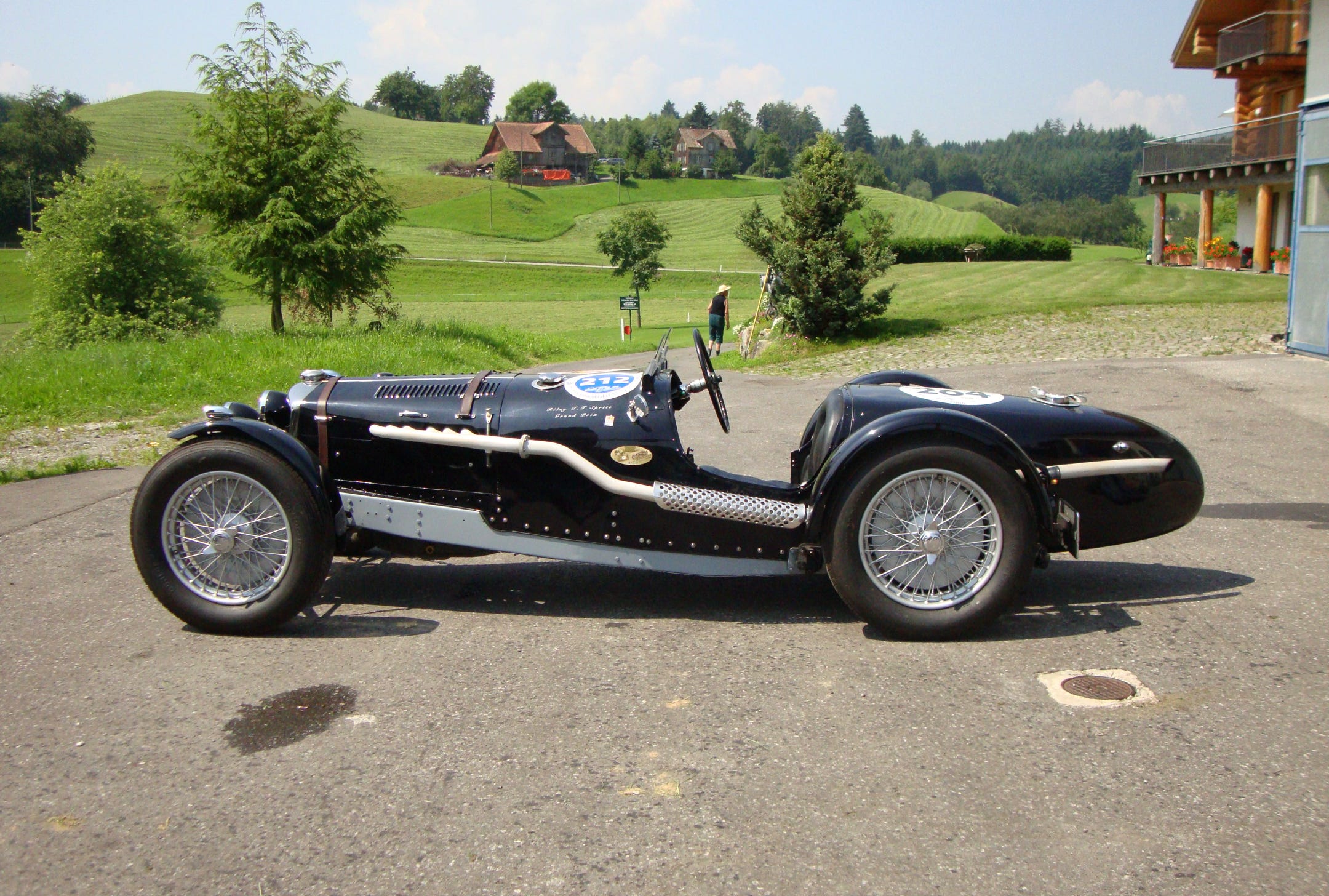
Dr Ernst Marty has owned the AVC20 for 23 years. However, apart from the international Klausen races in 2002, 2006 and 2013, the car is rarely presented at public events.
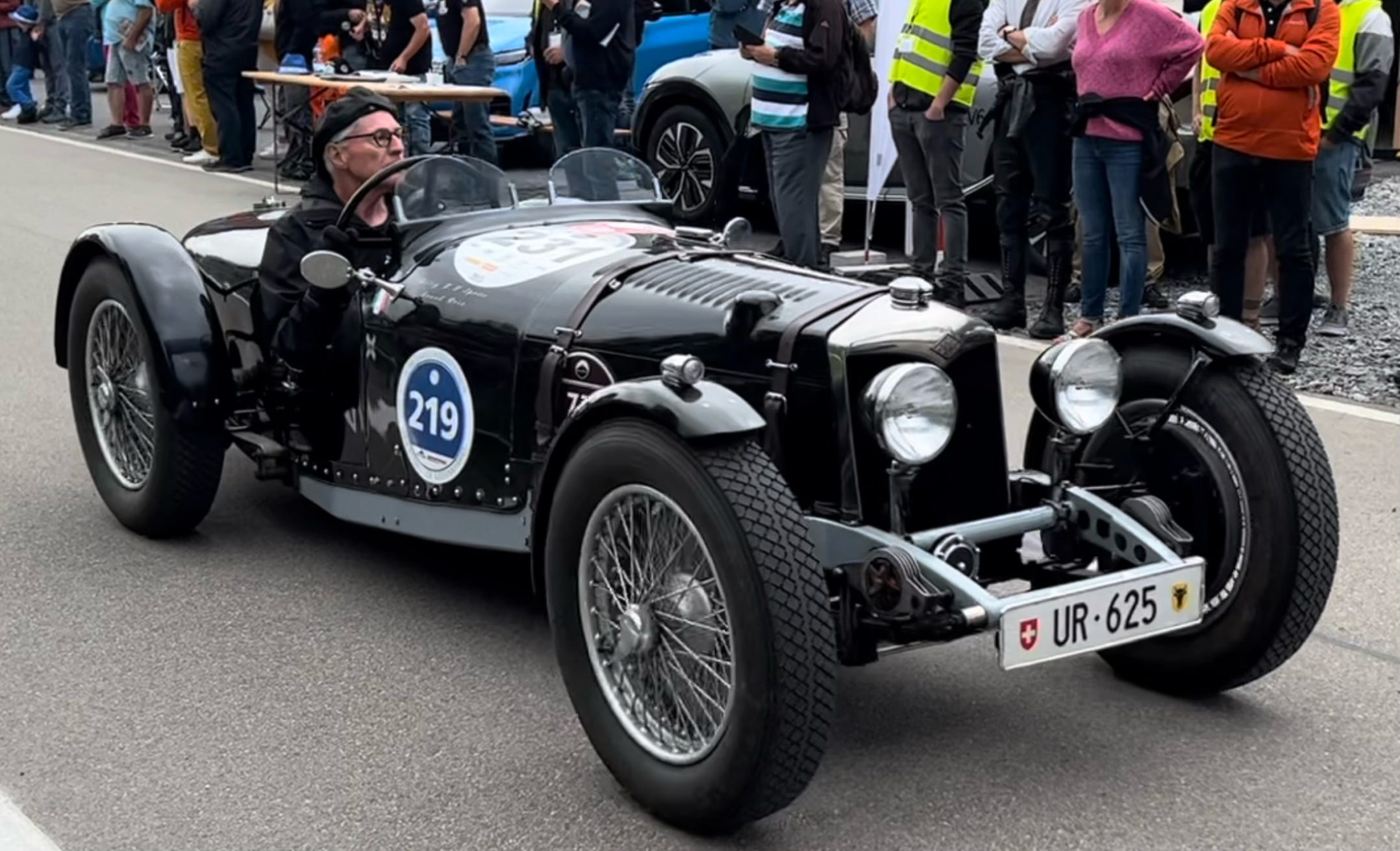
In August 2023, Olivier Purtschert buys the race car, including the original aero front and bonnet from 1948. Edy Schorno reworks the entire mechanics (excluding the engine). The car gets its first taste of international air in spring 2024 at the 100th anniversary of the Monthléry race track near Paris.
Further national and international appearances are planned for the future.
The story of the factory-built Riley TT Sprite AVC 20
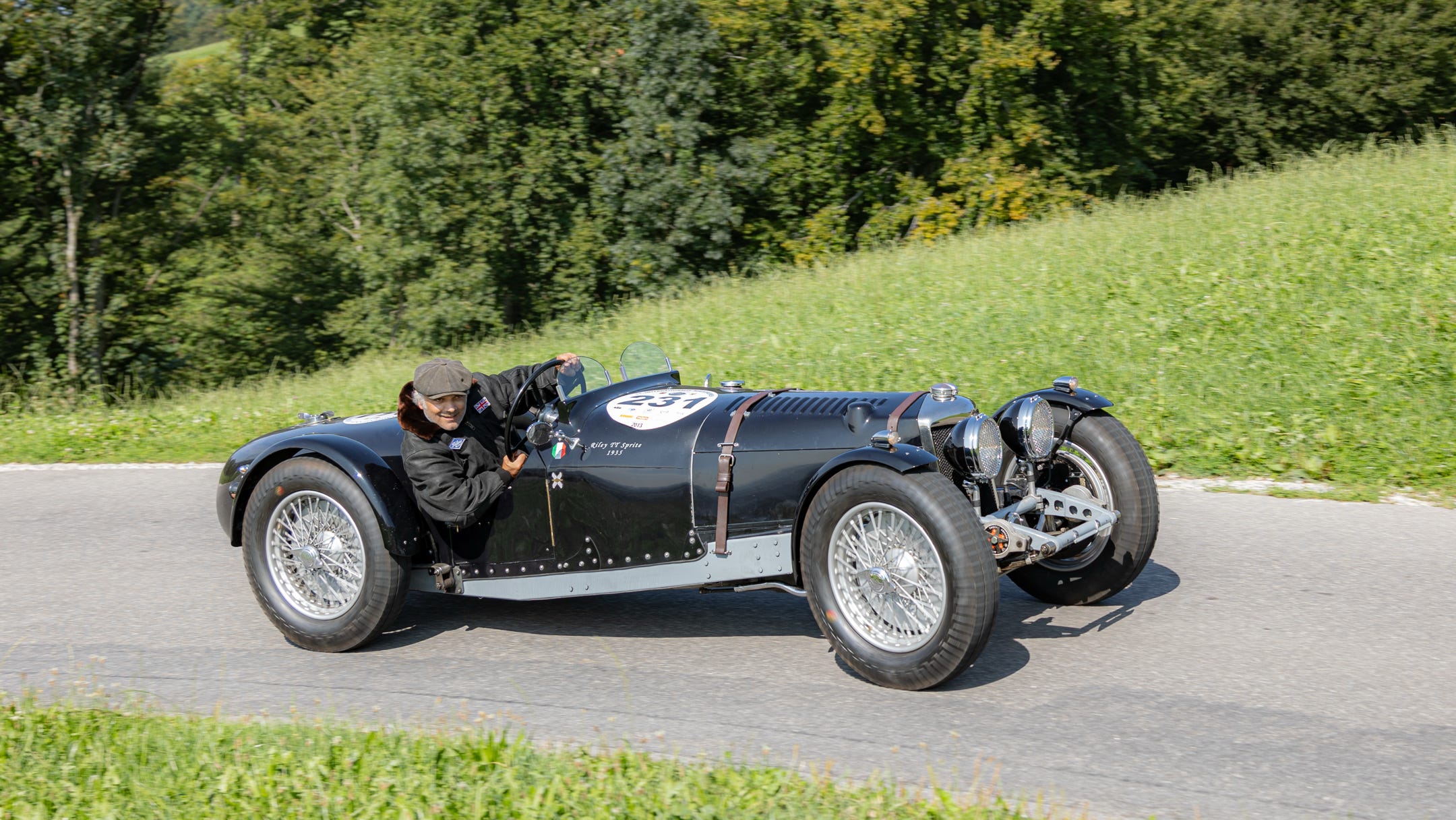
Why am I writing this documentation?
The history of the Riley TT Sprite is very turbulent. There are several vehicles that call themselves AVC 20 or at least carry parts of the AVC 20. Here I would like to record my research and try to help unravel this story a little.
Who am I?
My name is Olivier Purtschert, I am 49 years old and I come from Goldau in Switzerland. I am a good colleague of Edy Schorno. He is a significant restorer of pre-war vehicles and has made a name for himself in the scene, especially with Riley sports and racing cars, beyond the country's borders.
What connects me to the TT Sprite AVC 20?
In 2023, I was able to buy the Riley TT Sprite AVC 20, which Edy Schorno had completely restored and rebuilt in 2001/2002. Even back then, I had followed the construction with interest and admired the car. I never in a million years thought that I would own this vehicle. However, luck was on my side. A dream came true for me.
Why has a ‘new AVC 20’ suddenly turned up in Switzerland?
The car belonged to a Swiss doctor for almost 25 years. During that time, the vehicle was almost never shown at international events. The only exceptions were the participations in the international Klausen Memorial Races in Switzerland in 2002, 2006 and 2013. So this car was probably more or less forgotten even by Riley experts. I would now like to change that.
Picture on the left: Gordon Shillito, Isle of Man Manx Cup 1950
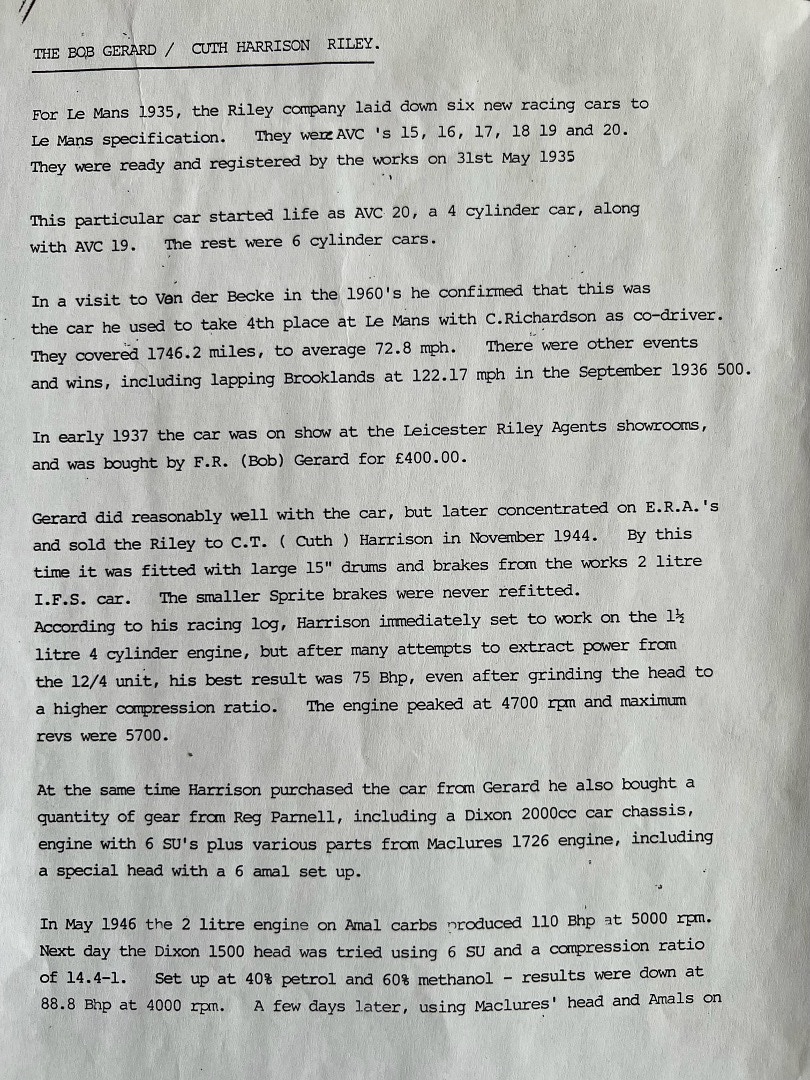
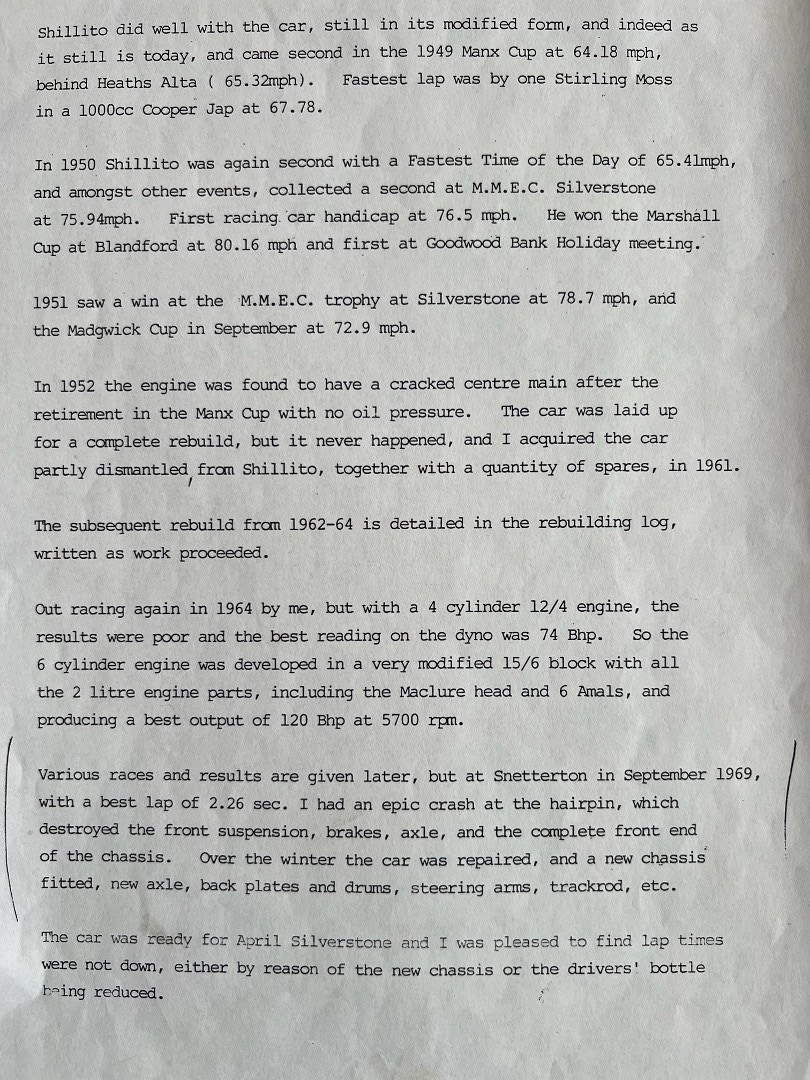
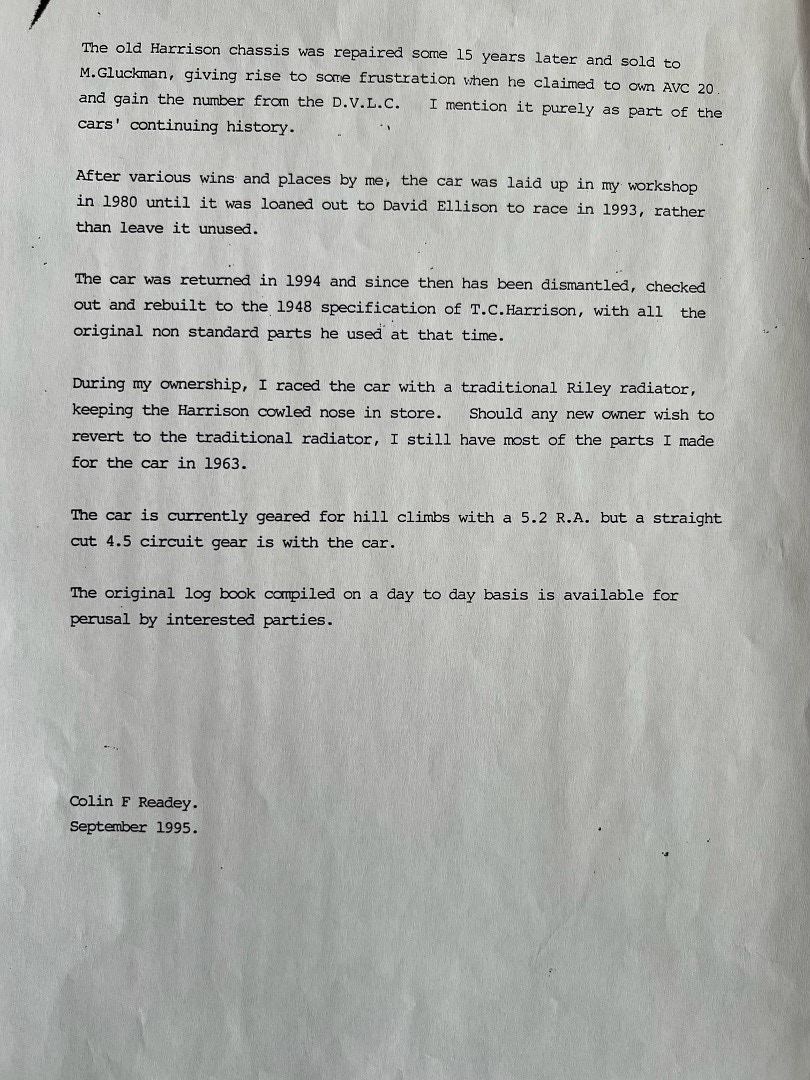
Four pages below:
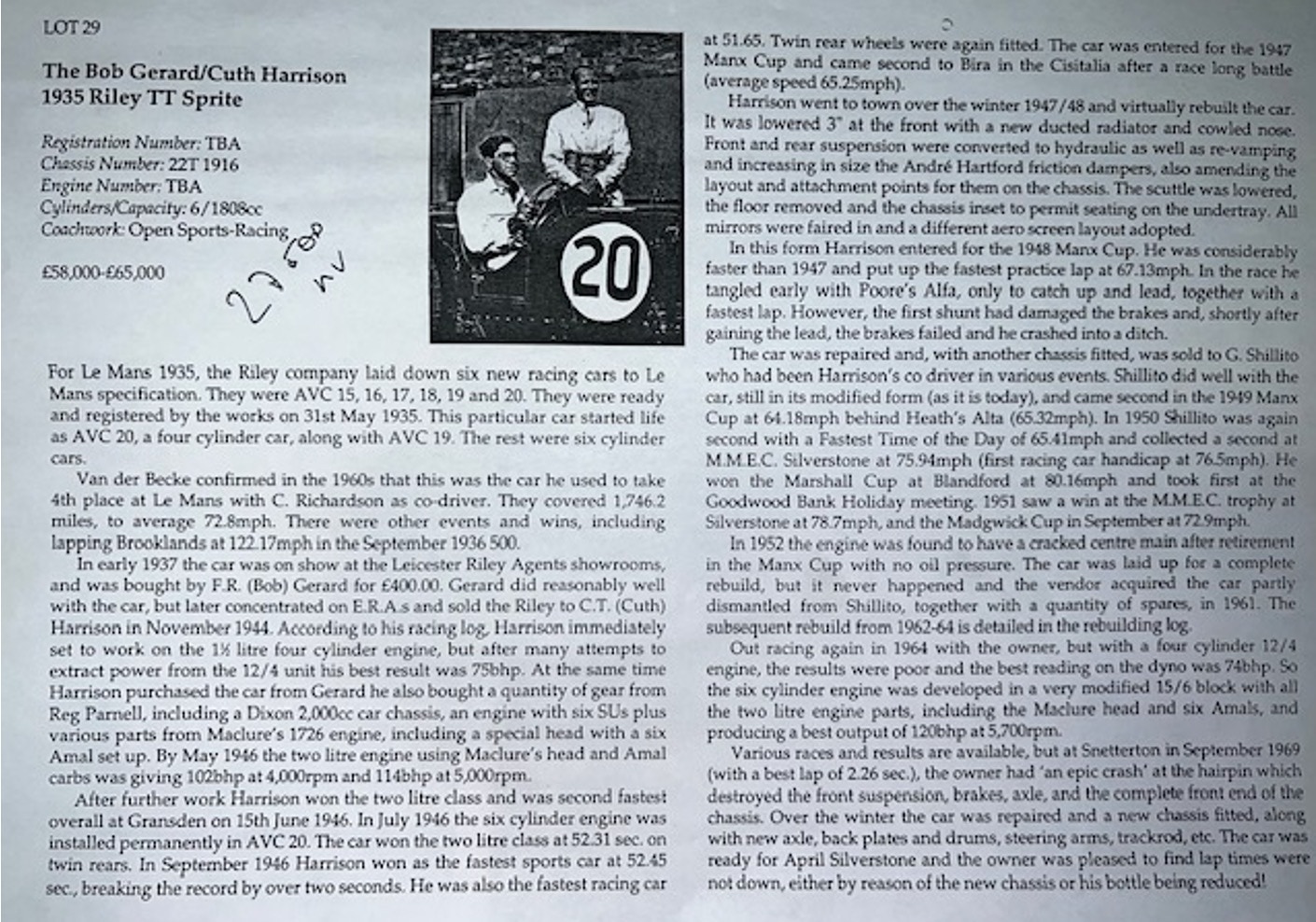
Text by Colin Readey from September 1995
We begin with the story from the birth of the car in 1935 until 1994 as told by Colin Readey. We have the story in this form in four copies. One of which was typed directly by Colin. This version also served as the basis for the description of the AVC 20 when it was auctioned at Coys OF Kensington on 14 December 1995. Edy Schorno visited Colin Readey several times in England during the restoration in 2001/2002. During these visits, Colin told him the story recorded here and confirmed it. During his visits, Edy was able to copy a lot of interesting data and photos. We also received all of Colin's race results. These include the results from 66 race weekends that he contested between 1964 and 1979 with the AVC 20. The descriptions of the photos also match the story that Colin told in writing and orally.
Text below:
Description from the Coys of Kensington auction on 14 December 1995
Picture below:
Condition of the AVC 20 before the auction and after the rebuild by Colin Readey in 1994/95
Text above:
Description from the Coys of Kensington auction on 14 December 1995
The car was sold in December 1995 with the cowl nose to Stefan Schollwoeck from Germany. We still have a copy of the customs papers dated 22 December 1995 from the import to Germany. Mr Schollwoeck rebuilt the car to the traditional radiator. For this purpose, he had the bonnet converted with a side opening for the exhaust. The exhaust now runs along the side of the car to the rear. Unfortunately, I don't have any pictures of the car from this period. I have tried to contact Mr Schollwoeck on my behalf, but so far without success. What is known is that Mr Schollwoeck sold the car to a Swiss buyer four years later. On 28 June 1999, the new owner, Georges Blättler, imported the car into Switzerland.
Restoration by Edy Schorno in 2001/02
We have a note from 1999 that an engine failure occurred during a race in Luxembourg. As a result, the car was completely dismantled down to the last screw for a complete rebuild. However, it soon became clear to the person carrying out the work that he was simply in over his head. So a new owner was sought for the pile of parts, and found in Dr Ernst Marty from Altdorf. Dr Marty took the parts to Edy Schorno and commissioned him to rebuild the beautiful racing car from this puzzle of parts. The task was more difficult than expected, because the vehicle was extremely worn. The engine, in particular, caused headaches because it was heavily tuned and ran on methanol. Many parts were badly worn.
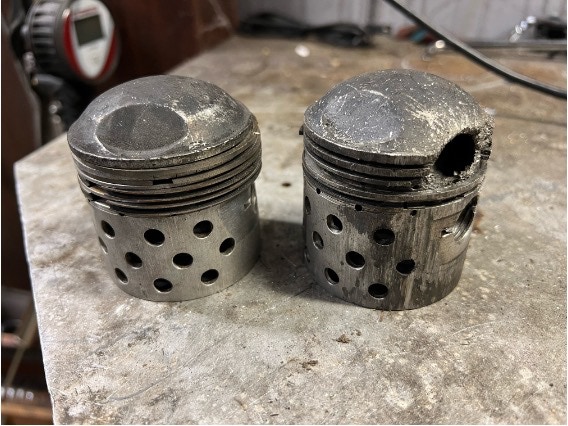
Picture on the left:
These two pistons give an indication of the state the engine must have been in in 1999.
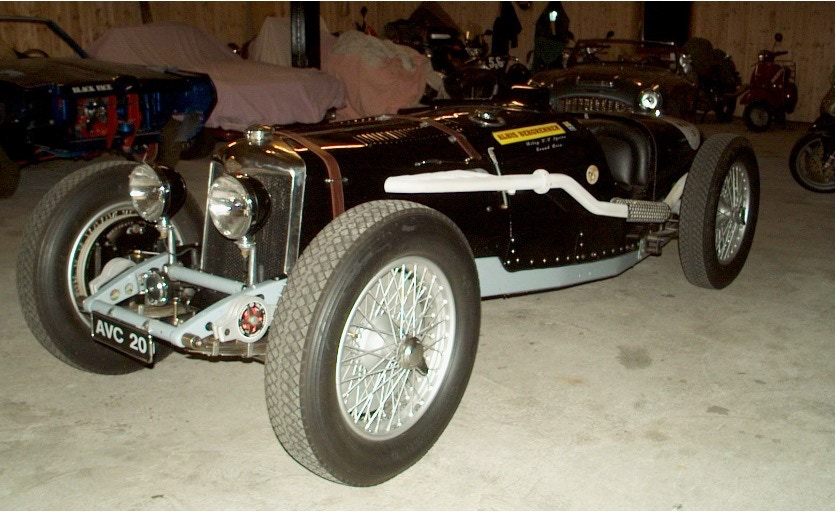
Pictures above, centre and below:
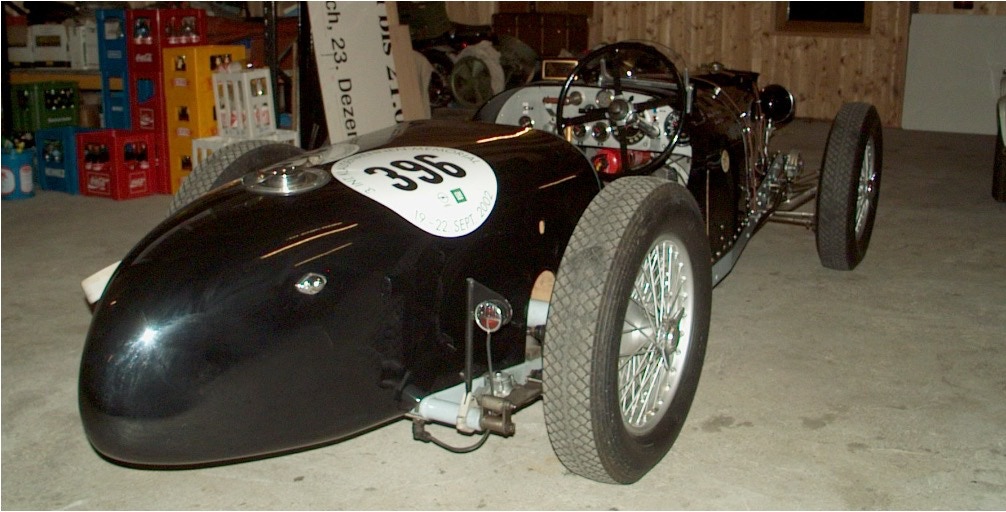
The AVC 20 photographed without mudguards in 2003 after restoration.
Bilder below:
The AVC 20 photographed after restoration with mudguards mounted.